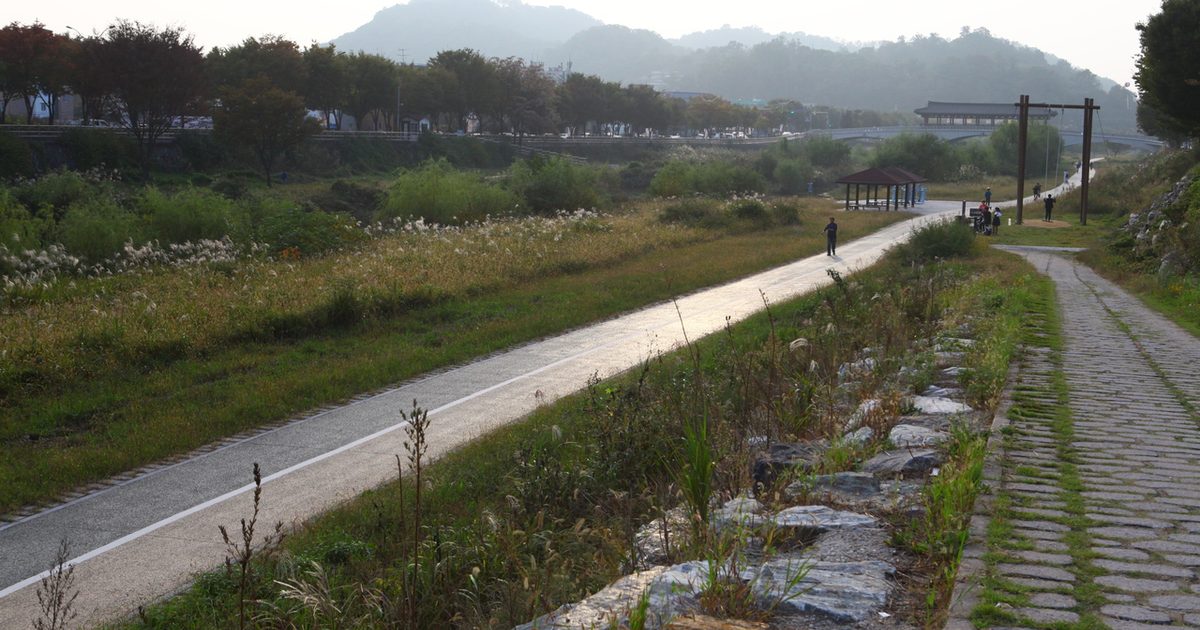
Most people picture Jeongdongjin as a place where you wake before 4 a.m., brace against the cold, and wait for the sun to crest the East Sea. But anyone who has walked through the area on an October afternoon knows what really stops you in your tracks: a field of reeds and silver grass shifting between gold and silver as the afternoon light drops low.
Why October — Peak Season for Reeds and Silver Grass
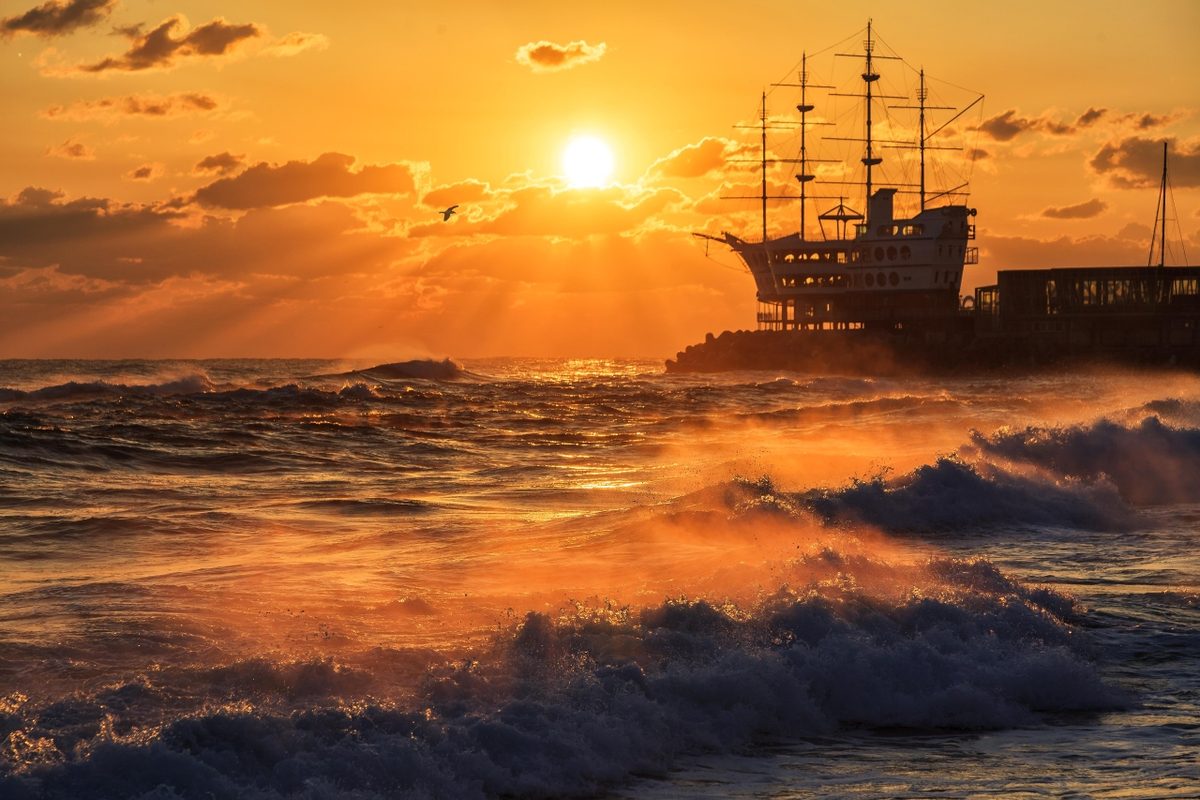
Silver grass (억새, *eokssae*) has a remarkable quality: depending on the angle and intensity of sunlight, it alternates between a cool silver shimmer and a deep, warm gold. October is when that transformation is most dramatic. In the morning backlight the grass rolls like a silver wave; by mid-afternoon, as the sun sinks toward the horizon, the entire field turns a rich amber. The same spot produces completely different photographs just an hour apart.
The reed beds add another layer to the scene, sitting within a wetland ecosystem that gives the landscape unusual depth. Around sunset, reflected light on the water surface moves in rhythm with the swaying reed plumes — a sight that tends to make visitors stop and simply stand still. The local saying that "the highlight of Jeongdongjin in autumn is not the sunrise but the hour just before sunset" is not an exaggeration.
What to See and How to Plan Your Route
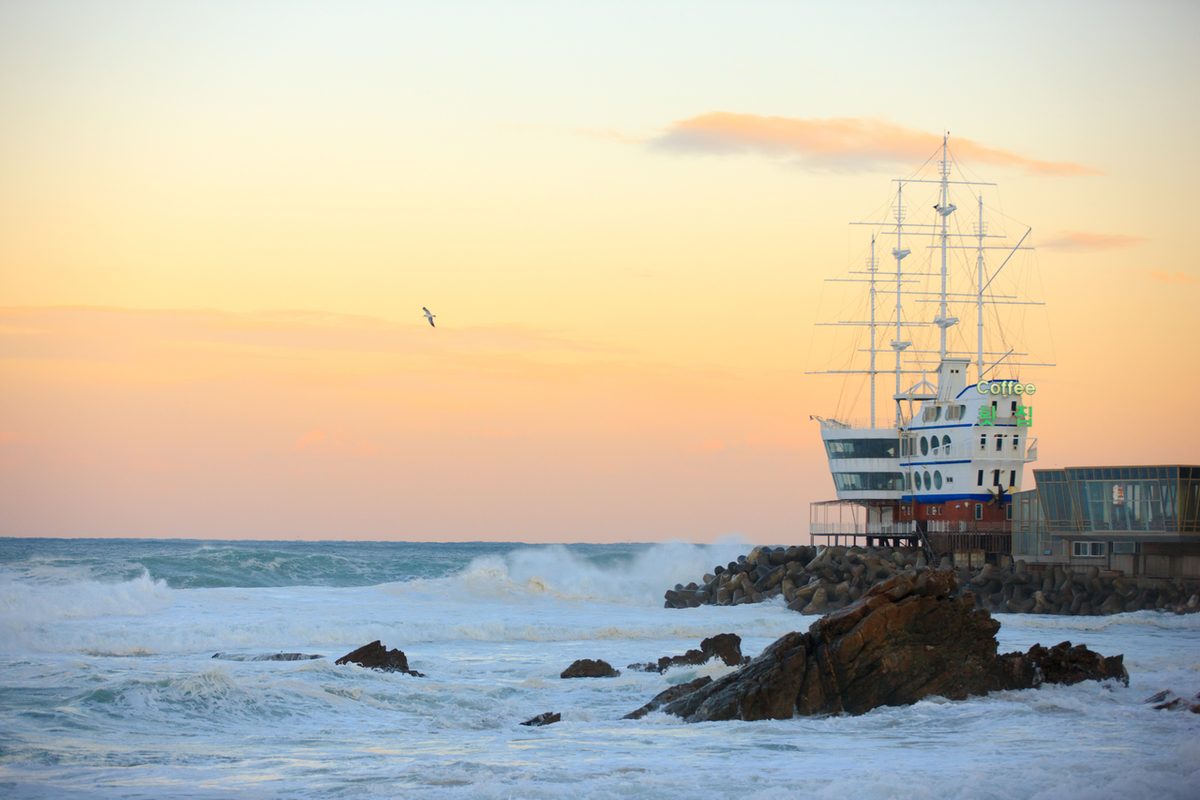
Make the reed fields and silver grass your anchor, then work the observation deck visit around them. Note that the observation deck has a set closing time, so calculate your travel time backward from the sunset hour — visitors frequently report missing the deck's last entry because they lingered too long among the reeds.
From late October through early November, Jeongdongjin is regularly grouped with Sokcho, Samcheok, and Uljin as part of a broader East Sea autumn circuit. The entire coastal corridor is vivid with seasonal change at this time, and many travelers combine these destinations into a one-night-two-day or two-night-three-day itinerary rather than visiting Jeongdongjin alone.
Getting There and Practical Tips
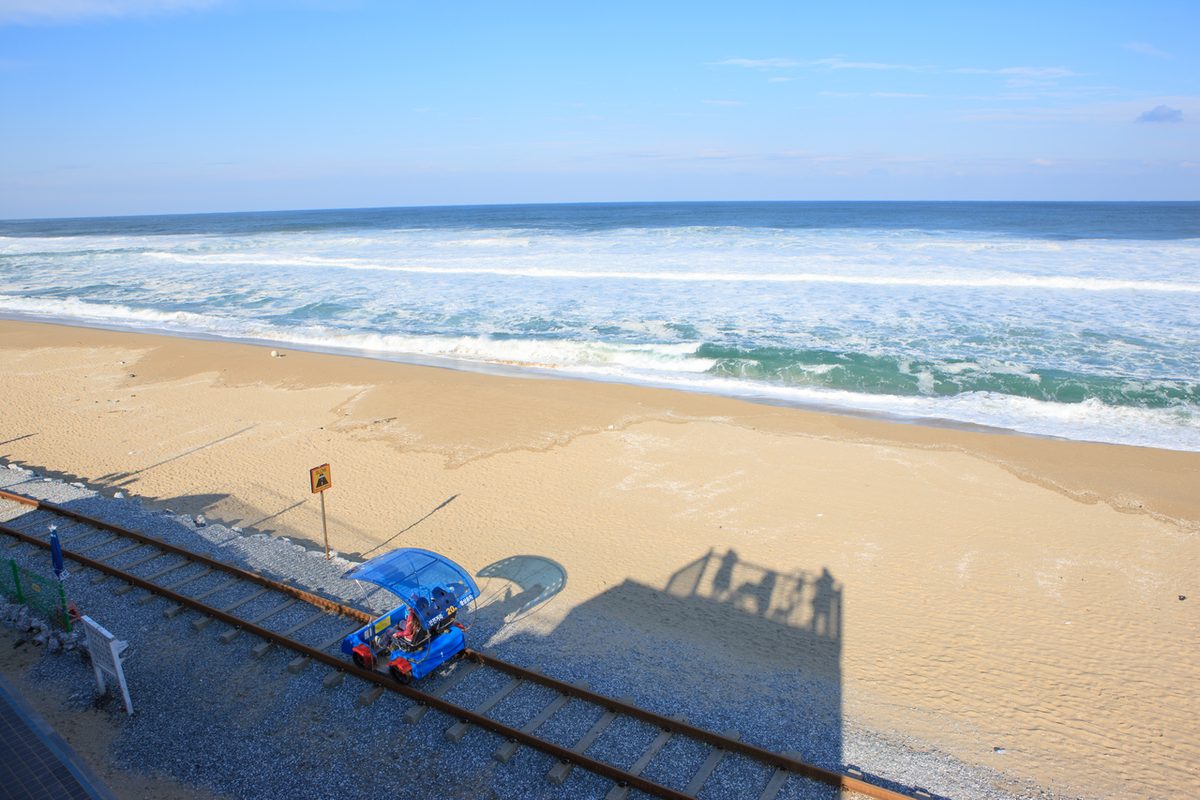
From Seoul, the most straightforward option is a KTX or ITX train from Cheongnyangni Station toward Gangneung. From Gangneung Station, continue to Jeongdongjin by local bus, taxi, or a connecting Mugunghwa train. If you are driving, parking fills quickly after 10 a.m. on weekends, so plan to arrive early or visit on a weekday.
The golden window for viewing the reeds is from around 3 p.m. until just before sunset — this is when the light catches the grass and reeds at their most vivid, and the crowd is somewhat more spread out than it is at dawn. October temperature swings in Jeongdongjin are significant, so pack at least one light outer layer regardless of how warm the midday feels.
If you have only ever come for the sunrise and left before noon, you have seen less than half of what Jeongdongjin offers in October.