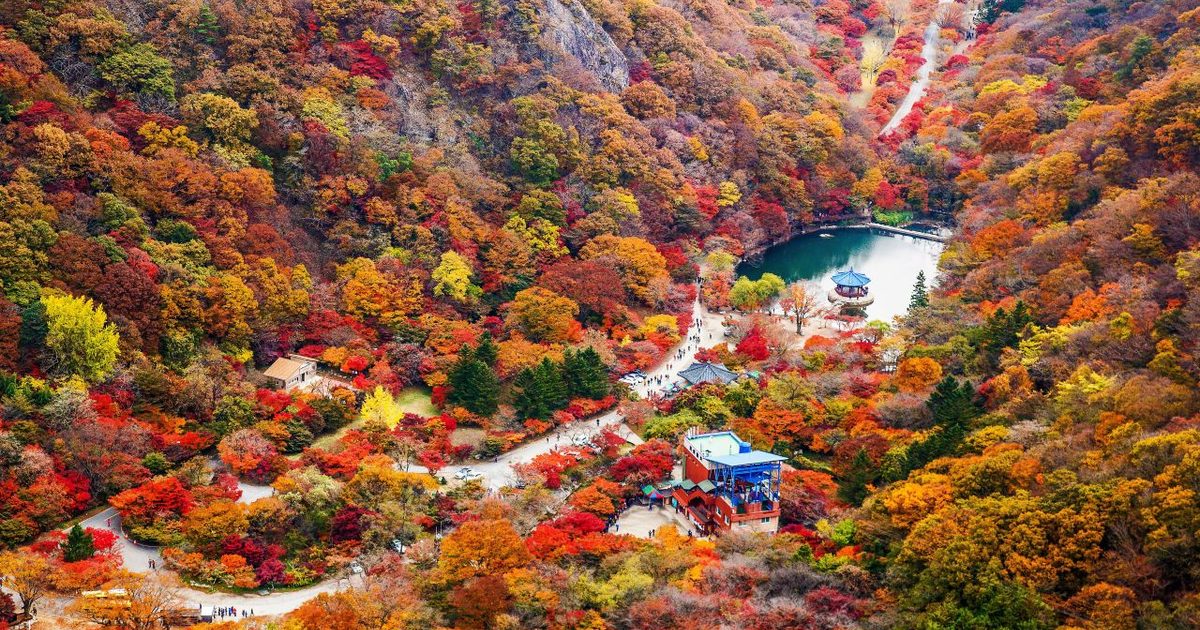
Whether it is your first visit to Naejangsan National Park or your fifth, there is one scene that always stops you in your tracks. Beyond the Iljumun gate, on the path leading toward Naejangsa Temple, maple trees arch overhead from both sides to form a living tunnel of colour. Known as the 108 Danpung Tunnel Road (108단풍터널길), this stretch was planted with exactly 108 maple trees — a number rooted in the Buddhist concept of clearing 108 earthly desires — and it remains the single most iconic image associated with Naejangsan.
Why Naejangsan's Autumn Colours Run So Deep
Naejangsan National Park holds the greatest diversity of maple species of any national park in Korea. Thirteen varieties grow together within the same mountain, including Korean maple (단풍나무), Amur maple (당단풍), downy maple (털참단풍), Acer pictum (고로쇠), Acer tataricum subsp. ginnala (신나무), and Acer triflorum (복자기). Because each species colours at a slightly different rate and produces a subtly different hue, the mountain does not turn a single flat shade — it layers yellow into orange, into vermilion, into a saturated crimson over the course of weeks. That depth and range set it apart from single-species foliage sites, and it is one of the reasons Naejangsan has appeared in Korea Tourism Organization's "Korea's Top 100 Tourist Destinations" three consecutive times since 2018, including the 2023–2024 edition.
Late October: When to Time Your Visit for Peak Colour
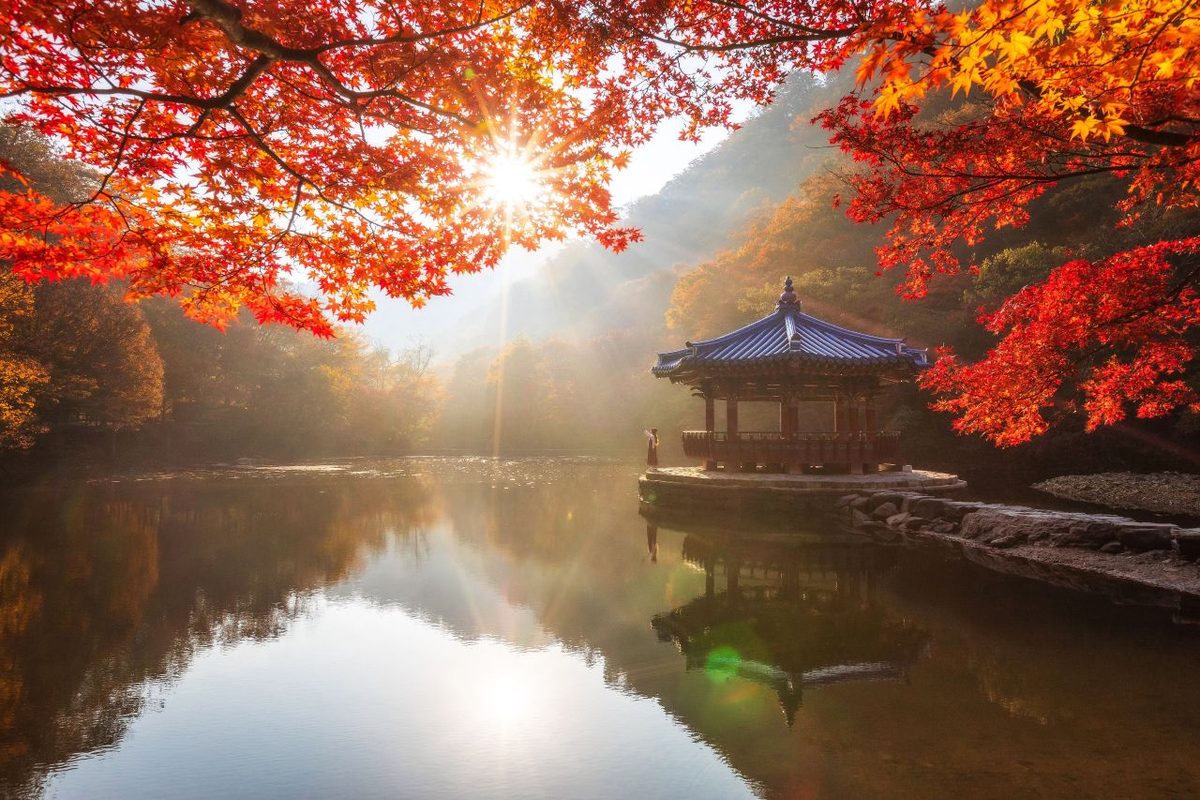
Colour typically begins to spread across the mountain in late October and reaches its peak in early to mid-November, though the exact timing shifts year to year depending on autumn temperatures. Start checking the foliage status reports on the Korea National Park Service website or Jeongeup City's official channels two to three weeks before you plan to travel. During peak season, private vehicle access inside the national park is restricted; visitors must enter on foot or by shuttle bus from the designated entry points. Confirm the traffic control schedule and access arrangements before finalising your plans.
How to Walk the 108 Danpung Tunnel Road
The tunnel stretch from the Iljumun gate to Naejangsa Temple runs along nearly flat ground, making it an easy walk for most visitors. At peak colour the path becomes a photograph in itself. That said, crowds become extremely dense after 10 a.m. on weekends, so a weekday visit early in the morning will give you a very different — and far quieter — experience. After walking the tunnel, explore the temple grounds, and if time and energy allow, take the cable car up to the ridge viewpoint for a panoramic look across the entire mountain. Cable car operating hours and fares can change during peak season; check the official website at naejangsancablecar.com before you go.
Practical Information to Check Before You Visit
Entrance and parking fees vary by zone and period and are subject to annual adjustment — verify the latest figures on the official national park website or at on-site notice boards. Some popular trails, including the Seoraebong and Byeongnyeonam sections, may operate under an advance reservation system during peak foliage season; check availability and book through the Korea National Park Service reservation system at reservation.knps.or.kr. Naejangsan during peak colour draws tens of thousands of visitors from across the country, so rather than a weekend day trip, consider an overnight stay on a weekday — you will enjoy the mountain at a significantly more comfortable pace.