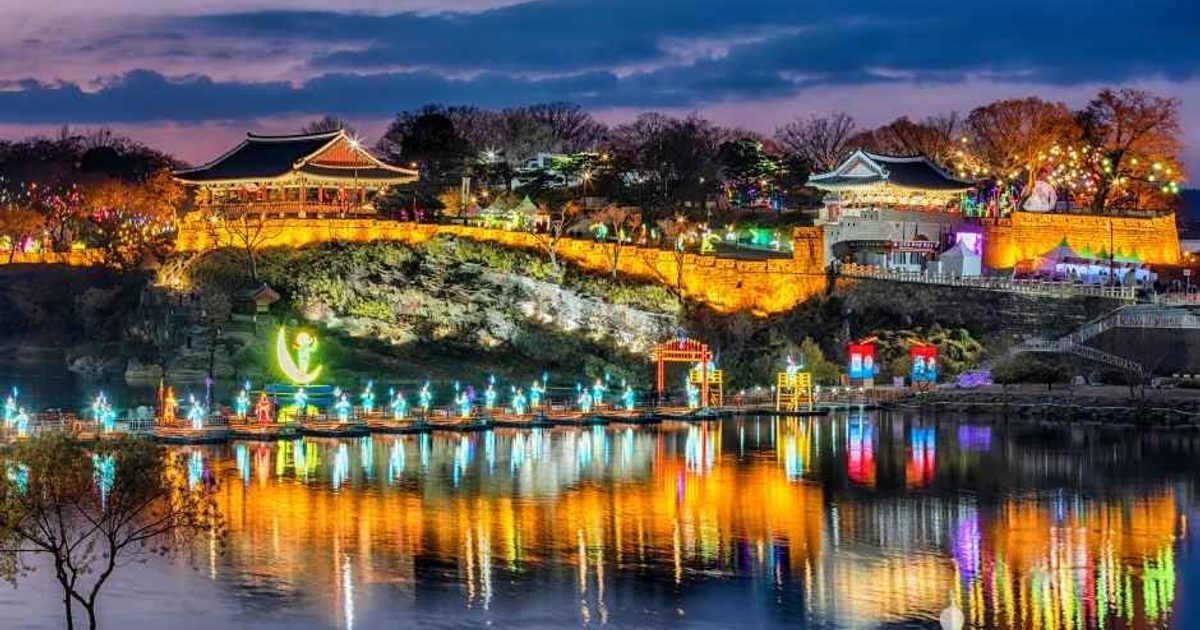
In October, as lanterns rise over the Namgang River, Jinju Fortress harbors a remarkably quiet route that exists apart from the festival crowds. Continue west along the fortress wall past the National Jinju Museum and you will reach the Seojangdae section. Most visitors photograph Chokseongnu and descend toward Uiam, so relatively few make the full walk out to Seojangdae.
Seojangdae — The Highest Point on the Fortress Wall
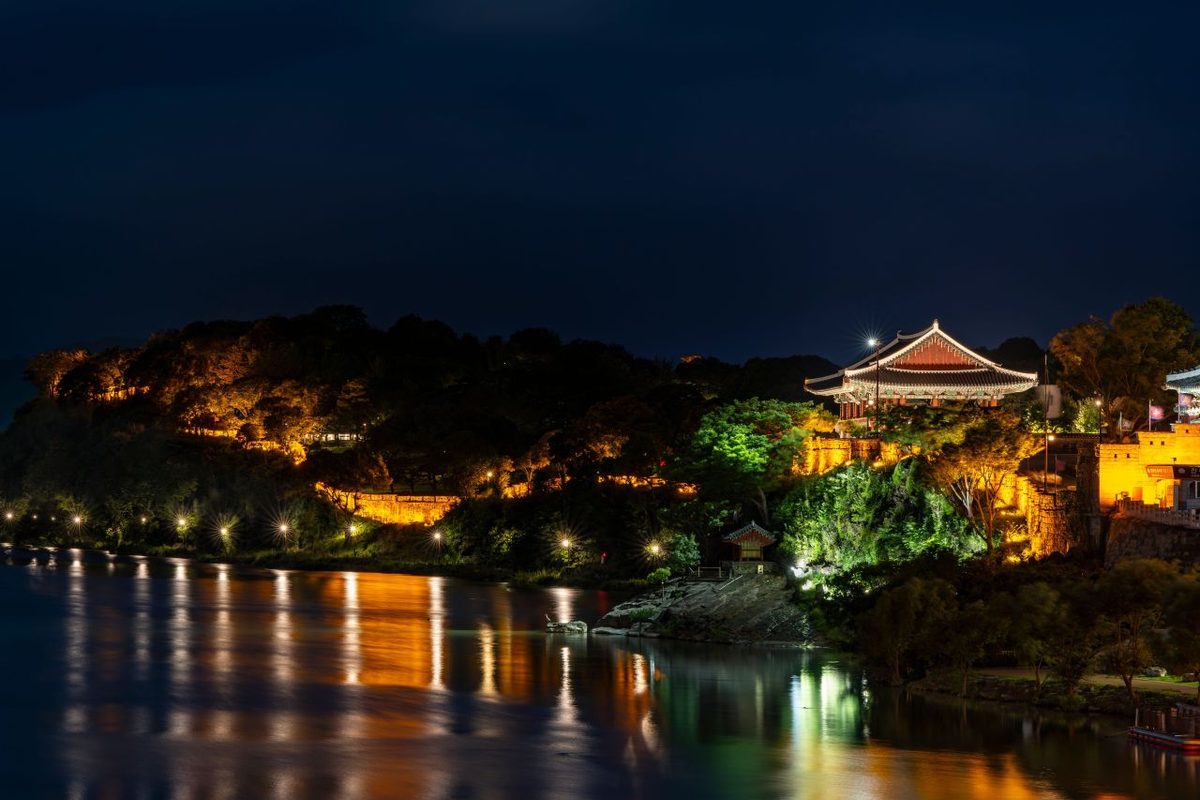
Seojangdae is a jangdae (將臺) — a command pavilion — occupying the highest point on the western rampart. In peacetime it served as a viewing pavilion; in wartime it was a general's command post. Perched on the cliff edge, it commands an unobstructed view in every direction: the urban streets of Manggyeong-dong spread out below, and the waterway of Jinyangho reservoir stretches into the distance. The elevation itself is modest, but the pavilion's solitary position at the tip of the wall gives it a remarkably open, expansive feel.
Seojangdae also carries layered memories of the Imjin War. Walking the rampart, you will pass Cheonjachongtong, Jijachongtong, and Hyeonjachongtong cannons aimed across the Namgang — a vivid reminder that real battles were fought on this ground. Just below sits Hoguksa Temple, which preserves traces of monk-soldier activity during the Imjin War, making it a natural add-on as you descend from Seojangdae.
Why October
October is when the entire fortress is washed in autumn color, and there is a reason Jinju Fortress consistently appears on South Gyeongsang Province foliage lists. The stone-wall path inside the ramparts connecting Seojangdae to Uigisa is especially pleasant to walk during foliage season, where trees and old stonework create an intimate, unhurried atmosphere. Peak color dates shift with each year's weather conditions, so check local conditions just before your visit.
After dark, the mood changes entirely. During the October Jinju Namgang Yudeung Festival, lanterns fill the river and the grounds inside and outside the fortress, pairing autumn foliage with a nighttime spectacle. Foliage by day, lanterns after sunset — a single October visit delivers two distinct seasonal experiences, and that combination is Jinju Fortress's greatest draw this time of year.
Route Tip — Walk West First
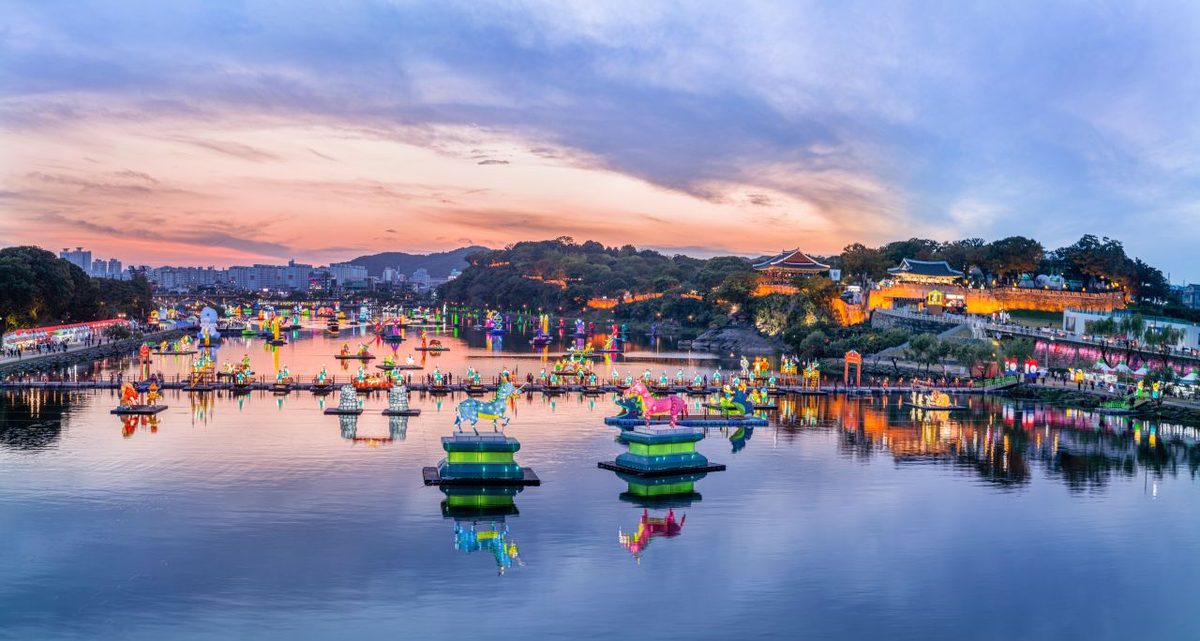
The standard path runs from the main gate, Gongbungmun, toward Chokseongnu, but walking in the opposite direction lets you sidestep the crowds. Start near the National Jinju Museum, climb first to Seojangdae at the far western end of the rampart, pass Hoguksa, then descend toward Uigisa. This way you reach the busiest spot, Chokseongnu, last — when the crowds have thinned and photography is easier.
The full circuit of the walls is approximately 1,760 m; a leisurely loop takes about an hour. The terrain is largely flat, making the walk accessible for elderly visitors and families with strollers.
Admission and Visitor Information
Admission is ₩2,000 for adults. Jinju residents and visitors aged 65 or older enter free with valid ID. Arriving before 9 a.m. or after 6 p.m. is also free, which suits an early-morning stroll or an evening lantern visit. Note that some facilities, including Uigisa, close at 6 p.m., so plan to arrive before 5 p.m. if you want to tour them.
The car park address is 615 Namgang-ro, Jinju-si, Gyeongnam. Parking costs ₩500 for the first 30 minutes for standard vehicles. Given the modest admission fee relative to what the site offers, Jinju Fortress is considered a high-value stop on an autumn itinerary through South Gyeongsang Province.