Climb slowly up the lower slopes of Yudalsan and a wooden signboard will eventually catch your eye: '정광정혜원', carved clearly in hangul. Jeonggwang Jeonghyewon is a temple you can reach on foot from central Mokpo, and it quietly holds some of the most layered modern history the city has to offer.
Why October
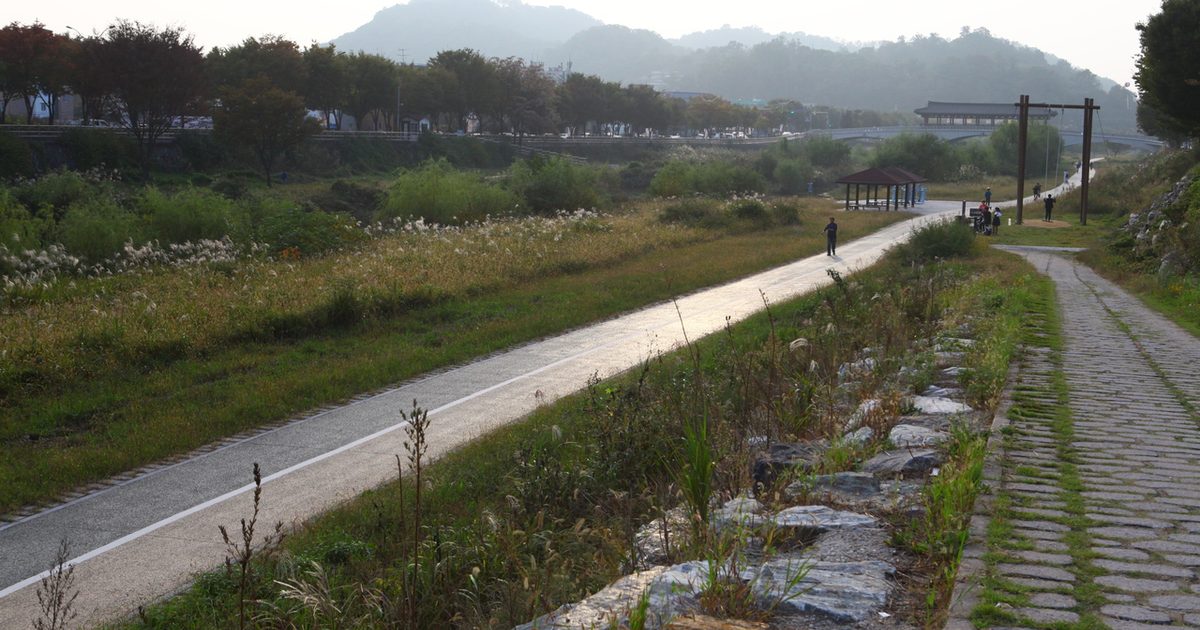
Yudalsan is Mokpo's defining mountain, yet it is not widely known as a autumn-foliage destination — and that is precisely the point. Unlike Gatbawi Rock or the marine cable car, which draw steady crowds, the stretch of trail leading up to Jeonggwang Jeonghyewon takes on an understated autumn character each October with no fanfare or signage to announce it. If you want to walk somewhere calm rather than crowd into a famous foliage spot, this is the kind of place that rewards the detour.
A Temple with More Than a Century of History
Jeonggwang Jeonghyewon's story begins in the 1910s. Founded in 1917 under the name Heungseonsa (興善寺), it served as a centre for Buddhist missionary activity in Mokpo during the Japanese colonial period. After liberation, the monk Manam took over the temple, renamed it Jeonggwang Jeonghyewon (淨光定慧院), and made it a working base for the Buddhist Purification Movement. A single change of name carried an entire change of era.
The temple is also known as the place where the monk Beopjeong and the poet Ko Un first met. According to Wikipedia — where the account is recorded with the qualifier 'it is said' — Beopjeong, then a university student helping with the practical work of the Buddhist Purification Movement before his ordination, encountered Ko Un, at that time the monk Ilcho, when Ko Un visited the temple. Independent verification against official sources has not been confirmed.
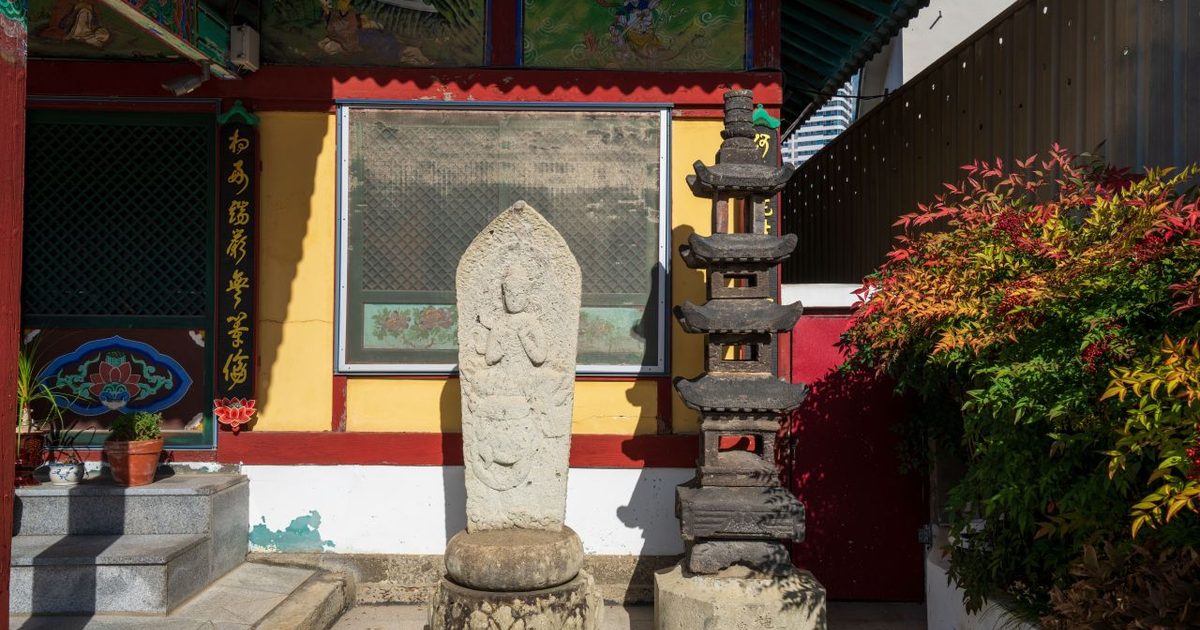
Still standing within the temple grounds are a Bodhisattva Samantabhadra statue and a stone pagoda, both dating to 1917. A copy of the Mahāprajñāpāramitā Sūtra (大盤若經, 1882), donated by a Japanese Buddhist organisation during the same period, is also preserved here. The building structure itself retains the distinctive form of Japanese-style temple architecture, making it a rare example of Korean modern Buddhist architecture.
Getting There
From Mokpo Station or Mokpo Bus Terminal, head in the direction of Nojeokbong-gil and you will reach the entrance to Yudalsan Park. Jeonggwang Jeonghyewon sits roughly halfway up that approach trail, connecting naturally with a broader Yudalsan walking route. Mokpo is a compact city that suits walkers well — Gatbawi Rock, the Modern History and Culture District, and the marine cable car can all be linked into a comfortable single-day itinerary.
Before You Visit
Admission fees and opening hours have not been confirmed through official sources. Check the Mokpo City tourism website or the Jogye Order of Korean Buddhism temple directory before you go. Small temples like this sometimes restrict interior access depending on the season.
The address is 26 Nojeokbong-gil (Jukdong), Mokpo, South Jeolla Province. A weekday morning or the hours before midday tend to offer the most peaceful experience inside the grounds. October weather in Mokpo is cool enough to make walking easy, so consider pairing a visit here with a broader Yudalsan stroll for a relaxed half-day out.