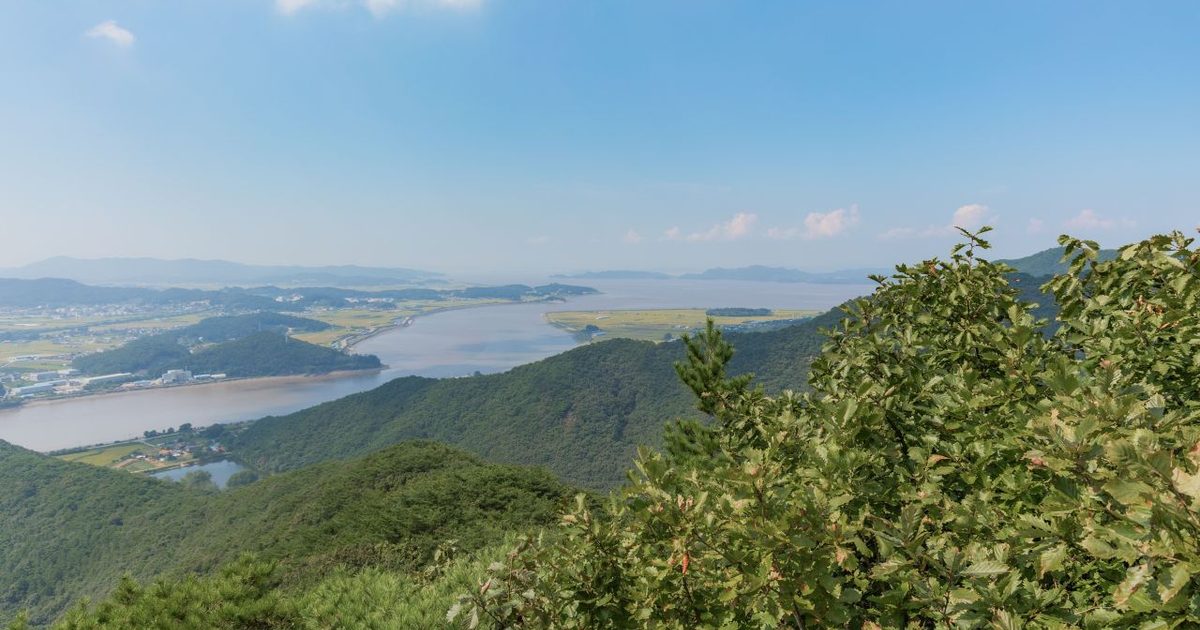
Munsusan tends to slip off the shortlist when people plan an early-autumn hike near Seoul. Yet those who make the trip almost always wonder why they waited so long. Located in Gimpo, Gyeonggi Province, roughly an hour from central Seoul by public transit, Munsusan offers something beyond a standard day hike: a mountain path where a Joseon-era fortress wall wraps along the entire ridgeline, turning the walk into an experience that is equal parts nature and history.
Why September — the quiet at the edge of autumn
September is actually the calmest month on Munsusan. It falls between the spring azalea season and the peak autumn foliage crowds of October, so even on weekends you can set your own pace without being jostled along. The air is noticeably lighter than in midsummer, and the wind coming off the ridge already carries an autumn edge. If what you want is the simple satisfaction of working up a sweat on the ascent and cooling off in a breeze on the way down, September on Munsusan delivers that reliably.
The heart of the hike — the Munsusan Fortress trail
What sets Munsusan apart from other hills in the Seoul metro area is the fortress. Munsusanseong was built in the 20th year of King Sukjong's reign during the Joseon Dynasty, alongside Gapgotjin, to defend the entrance to Ganghwa Island. At its original extent the wall stretched approximately 6 km and comprised three gate towers — a south gate, a north gate, and a west gate — along with four smaller auxiliary gates, making it a full military installation. Today the north gate, south gate, south auxiliary gate, and east auxiliary gate survive, and a 434-metre section of wall between the south auxiliary gate and east auxiliary gate has been restored, along with the north and south gates.
Walking the ridgeline and seeing the wall up close is the highlight of the hike. Near the south gate, the stonework near the summit shows carefully squared and fitted blocks. On the section running from the north gate up toward the summit, the original wall stands up to 13 courses of split stone high. Scattered along the wall are inscribed texts recording which military unit was responsible for constructing each section — a detail that makes it easy to picture the soldiers who climbed this same ridge centuries ago.
The fortress carries a particular historical weight beyond its age. In 1866, the third year of King Gojong's reign, French forces occupied Munsusanseong during the French Campaign against Korea (Byeonginyangyo). Standing on the wall today, with an open view stretching toward Ganghwa Island, that geopolitical tension from more than 150 years ago feels strangely present.
Route and logistics — how to walk it
The standard recommended route starts at the forest-bath park (sanlimyokjang) car park, climbs to the summit, passes through Munsu Temple, and descends via the north gate. This loop takes in both the fortress wall and the temple without significant backtracking. The gradients are moderate and the trail is generally well maintained, so heavy mountaineering gear is not necessary.
Munsu Temple sits along the path and is a small, unassuming temple — a place that suits stillness more than spectacle. It makes a natural rest stop on the way down after taking in the fortress sections above.
Getting there — from Seoul and the wider capital region
By public transit, the typical approach is to take Seoul Metro Line 5 or the Airport Railroad (AREX) to Gimpo Airport Station, then transfer to a local bus toward Gimpo. That said, specific bus numbers and journey times vary depending on your departure point and the time of day. Before you leave, set 'Munsusan Sanlimyokjang' (문수산 산림욕장) as your destination in Naver Maps or Kakao Maps for real-time routing. If you are driving, there is a car park at the forest-bath park entrance.
September hiking tips
Leaving early in the morning means you will often have the trail largely to yourself. Temperatures can still climb noticeably by midday in September, so planning to reach the summit and begin the descent before noon keeps the hike comfortable. Some sections along the fortress wall are exposed to strong wind, so a light layer packed in your bag is worth it. October brings noticeably more visitors as foliage peaks; coming in September instead is how you experience Munsusan the way regulars know it.