Step a few paces from the COEX intersection and the air changes. The traffic noise and crowds fade, and a thousand-year-old stone pagoda and maple trees appear before you. This is Bongeunsa, in Samseong-dong, Gangnam-gu, Seoul.
Why Visit Bongeunsa in October
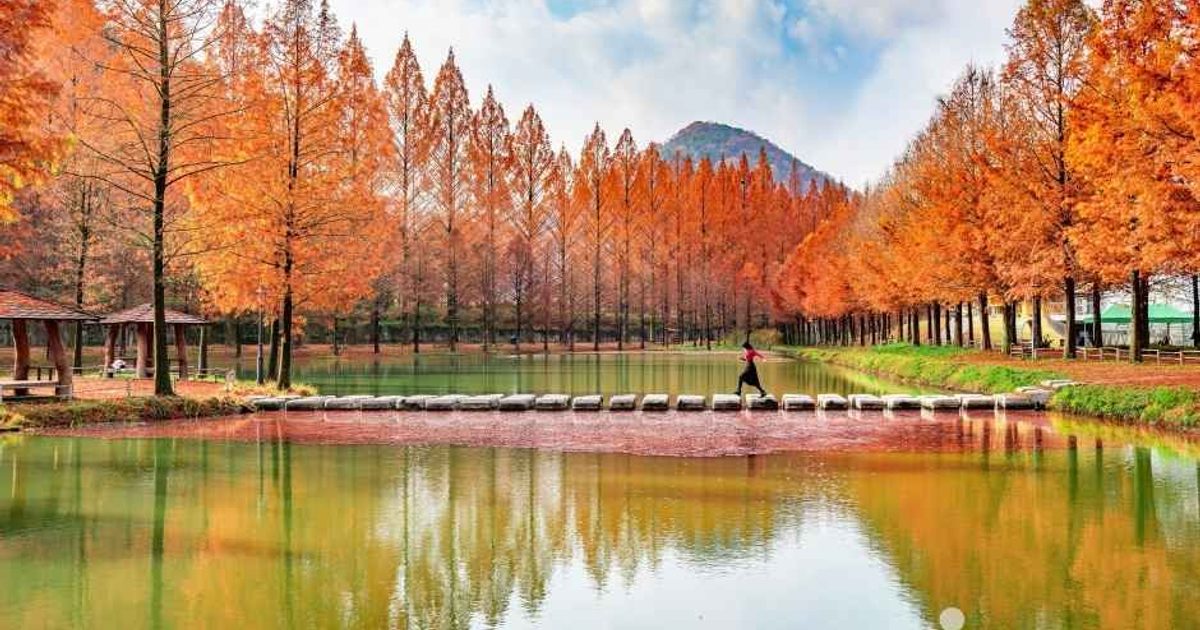
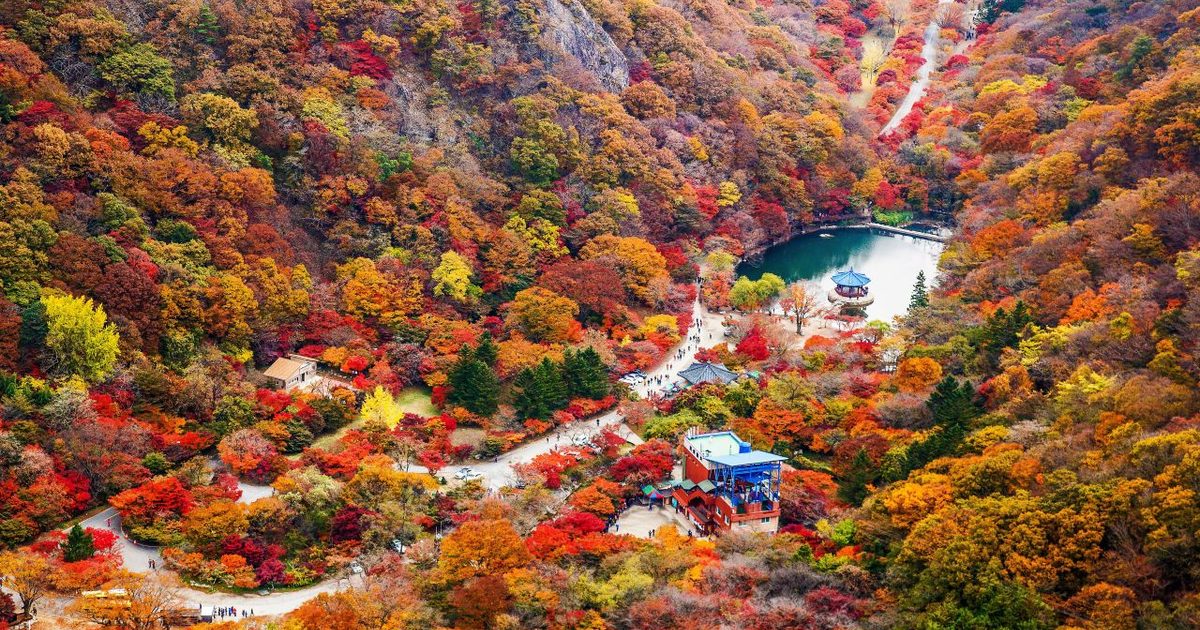
Bongeunsa's autumn is made more striking precisely because it sits in the middle of the city. Surrounded on all sides by high-rise buildings, the temple grounds transform into a completely different world once you step inside — ginkgo and maple trees turning vivid yellow and red. Peak foliage timing shifts slightly each year depending on temperature and weather, but colours are generally at their finest between mid- and late October. Visiting early on a weekend morning or on a weekday afternoon keeps the crowds manageable and makes for a quiet stroll.
What to See at Bongeunsa
The temple's name — written with the characters for 'to honor' (奉), 'grace' (恩), and 'temple' (寺) — reflects its meaning as a place that venerates grace. It was founded by the Buddhist monk Yeonhoe Guksa and boasts a history of more than 1,200 years. The first gate on the grounds is not the standard 'iljumun' (一柱門) found at most Korean temples, but is instead called Jinyeomun (眞如門) — a name derived from the Buddhist concept of 'jinyeo' (眞如), meaning 'things as they truly are.' Before you even set foot inside the main precinct, it becomes clear this is no ordinary temple.
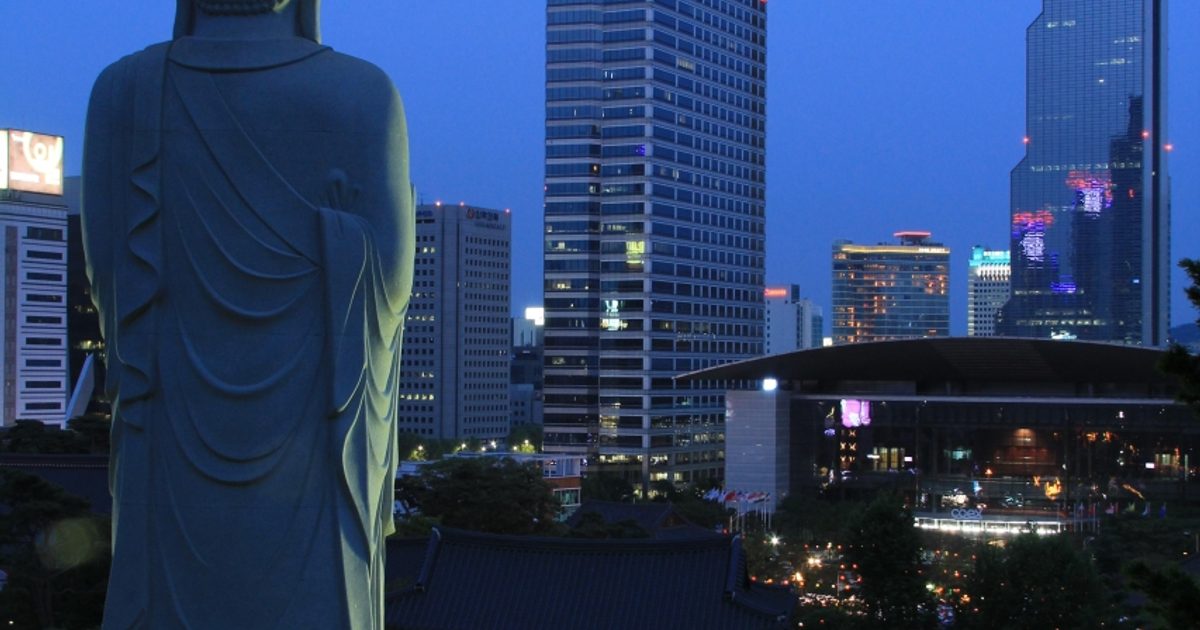
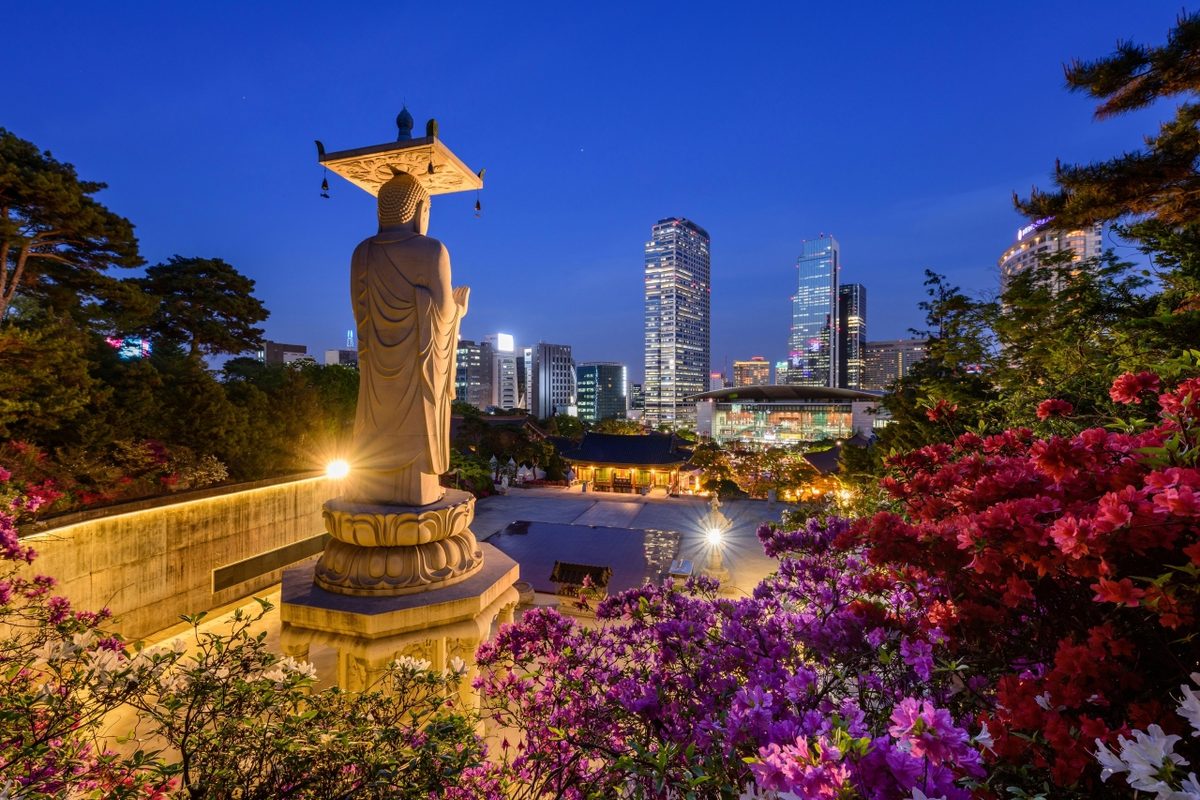
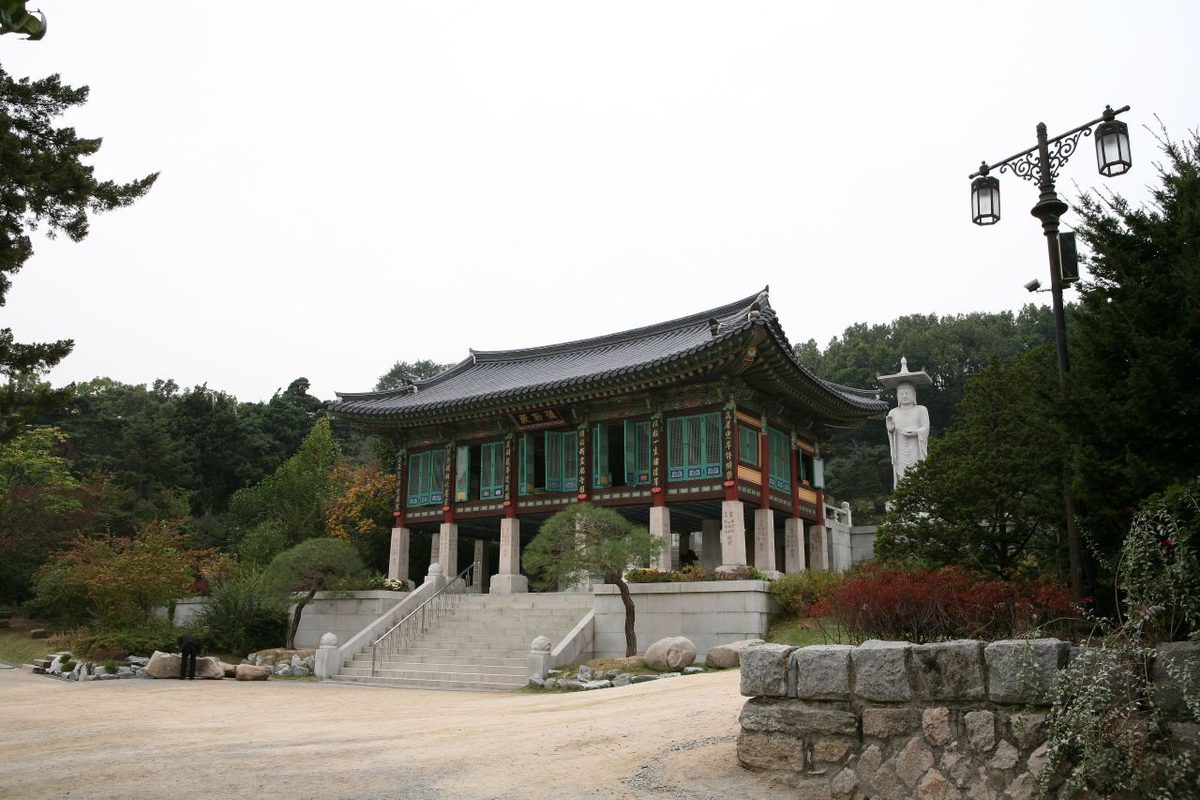
Walking through the grounds, you will come face to face with the Mireuk Daebul, a Maitreya Buddha statue standing 23 metres tall — the largest Buddhist statue at any temple in Seoul. More than 10,000 donors contributed to its construction, and it took ten years to complete. The sight of this immense statue framed by autumn foliage is a highlight visitors consistently seek out. The area around the statue is also reported to be lit up at night; check Bongeunsa's official channels before your visit for current lighting hours and details.
Yeonhoeru, named after the founding monk Yeonhoe Guksa, now operates as Yeonhoe Dawon, a traditional tea experience hall. A natural itinerary pairs an autumn stroll through the grounds with a warm cup of traditional Korean tea at Yeonhoe Dawon to finish.
A major fire in 1939 destroyed most of the principal buildings on the grounds, including the Daeungjeon (main hall), Jinyeomun, and Manseeru. Only the Panjeon survived the blaze and still stands in its original location today. Standing before a structure that has endured for centuries tends to inspire quiet reflection.
Getting There
The subway is the most convenient option. Bongeunsa is within walking distance of Exit 1 at Bongeunsa Station (Line 9), Exit 6 at Samseong Station (Line 2), or Exit 2 at Cheongdam Station (Line 7). If you are driving, parking is available on the temple grounds: the first 30 minutes are free, and using facilities such as the temple cafeteria (gongyang-gan), Yeonhoe Dawon, or the café extends free parking to two hours. The grounds are open every day from 05:00 to 22:00.
Visitor Tips
Weekend afternoons during peak foliage season can get quite busy. If you want to take photographs at your own pace, aim for a weekday morning or early in the day. The COEX area nearby makes it easy to combine a temple visit with cafés or restaurants for a half-day itinerary. A templestay programme is also reported to be available, though bookings open and close on a rolling basis — check the Bongeunsa official website before your visit to confirm the current schedule. Admission to the temple grounds is free.