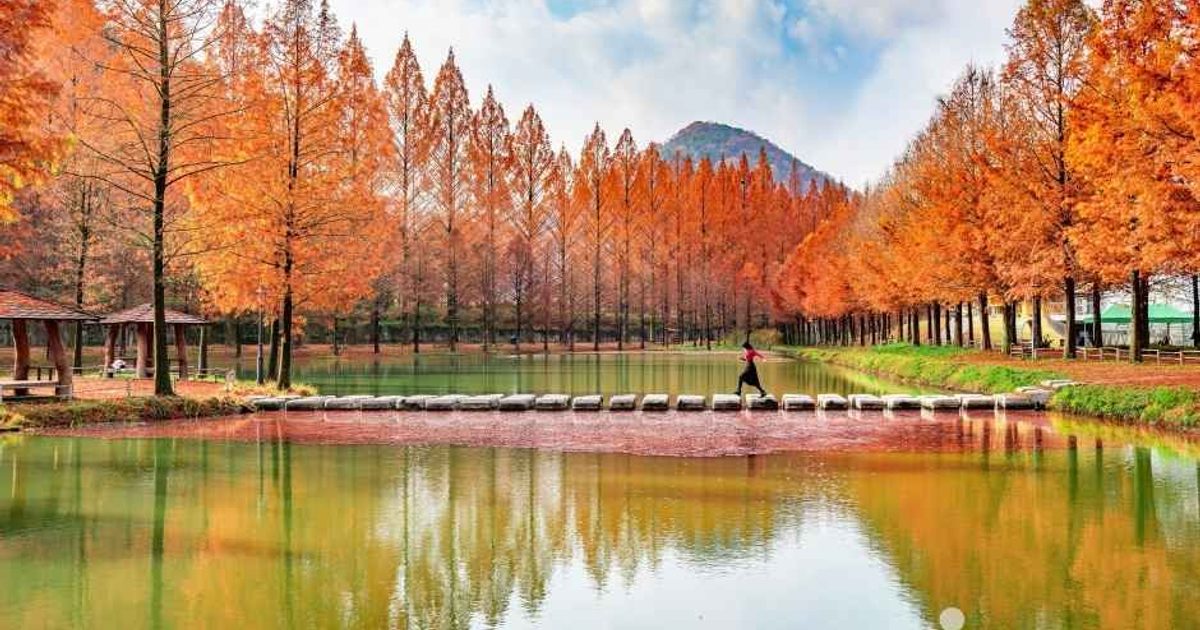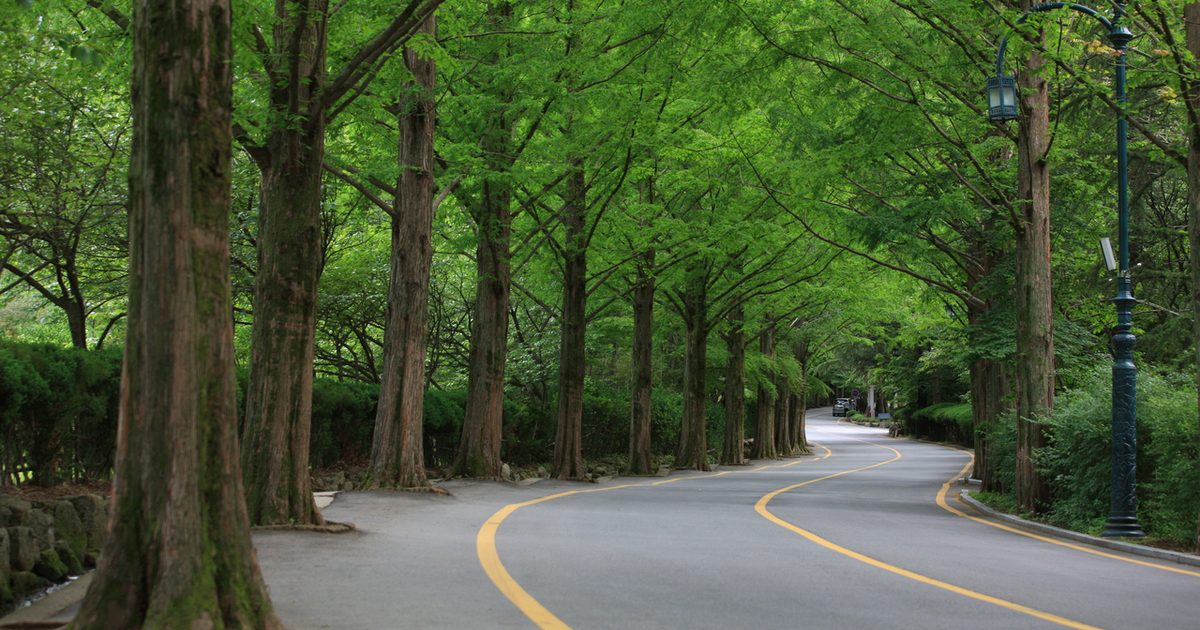
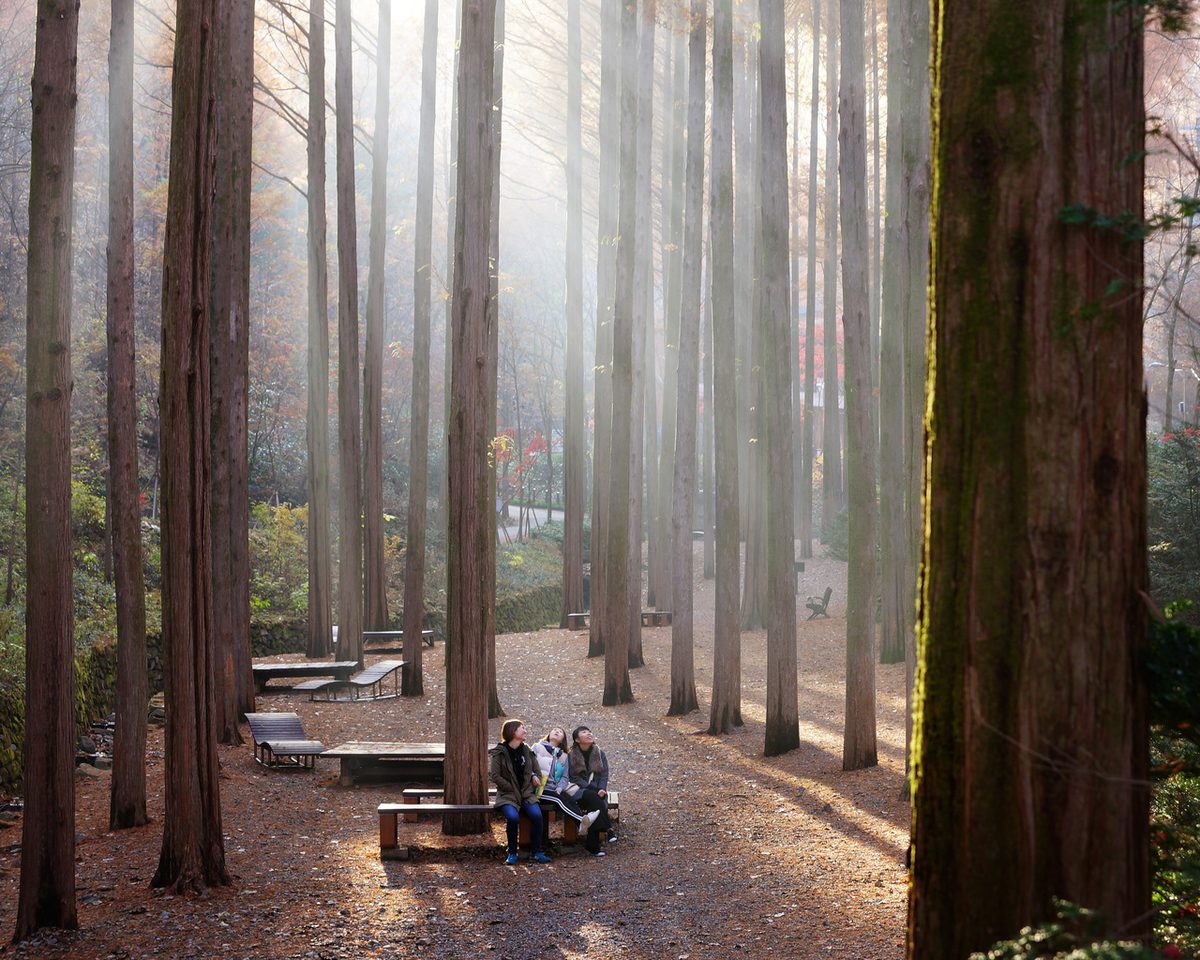
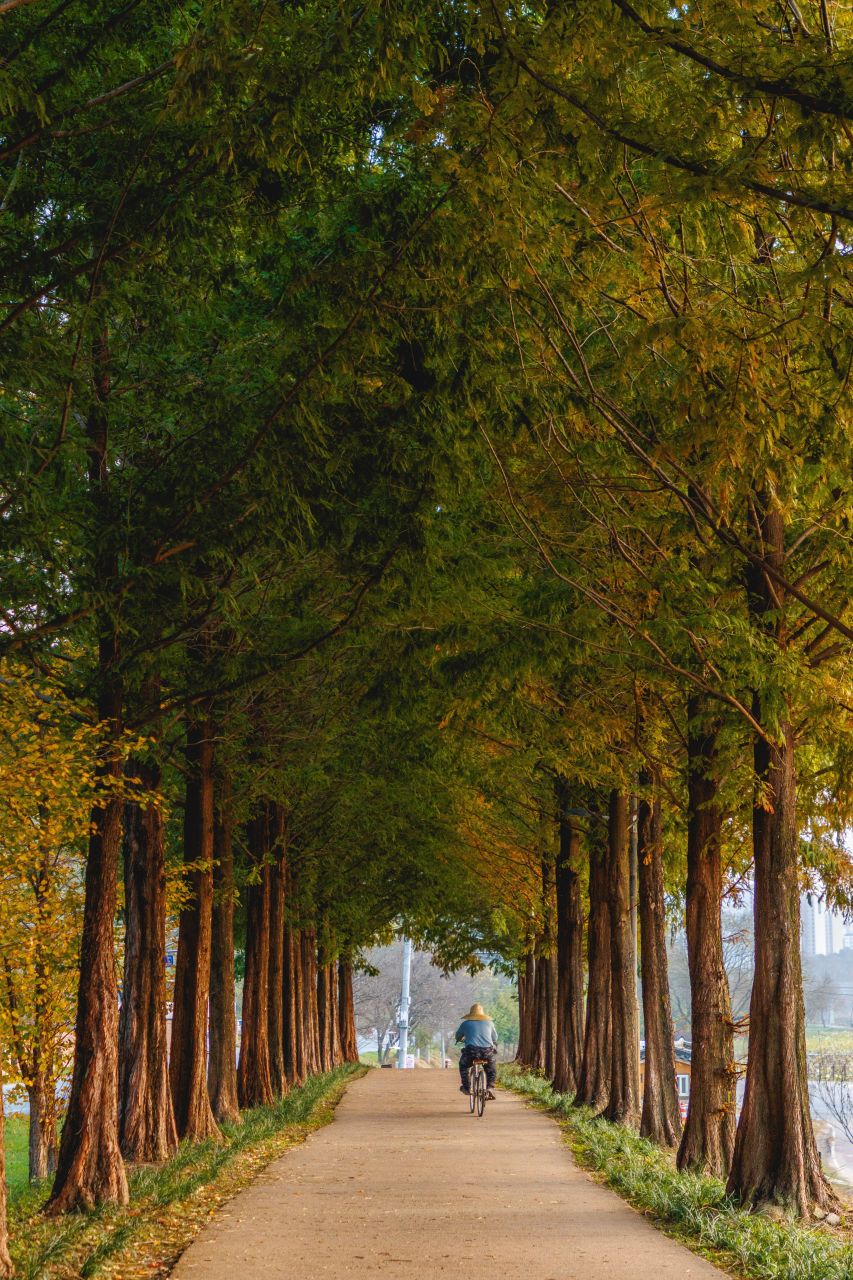
When autumn colour is dominating headlines from Seoul and Seoraksan, there's no need to rush south. Damyang sits in Korea's southern region, so its foliage arrives two to three weeks later than the capital. Colour begins creeping in between late October and early November, and by mid-November the rows of metasequoia trees — rising dozens of metres on either side — close into a complete tunnel of red and gold. One experience surfaces repeatedly across multiple visitor accounts: standing on the road at dawn as a thick morning mist fills the air, then watching light press through the leaves as the fog lifts. Visitors have described waiting more than three hours for that moment, and the consensus is that the scene justifies every minute.
Why Late October to Mid-November
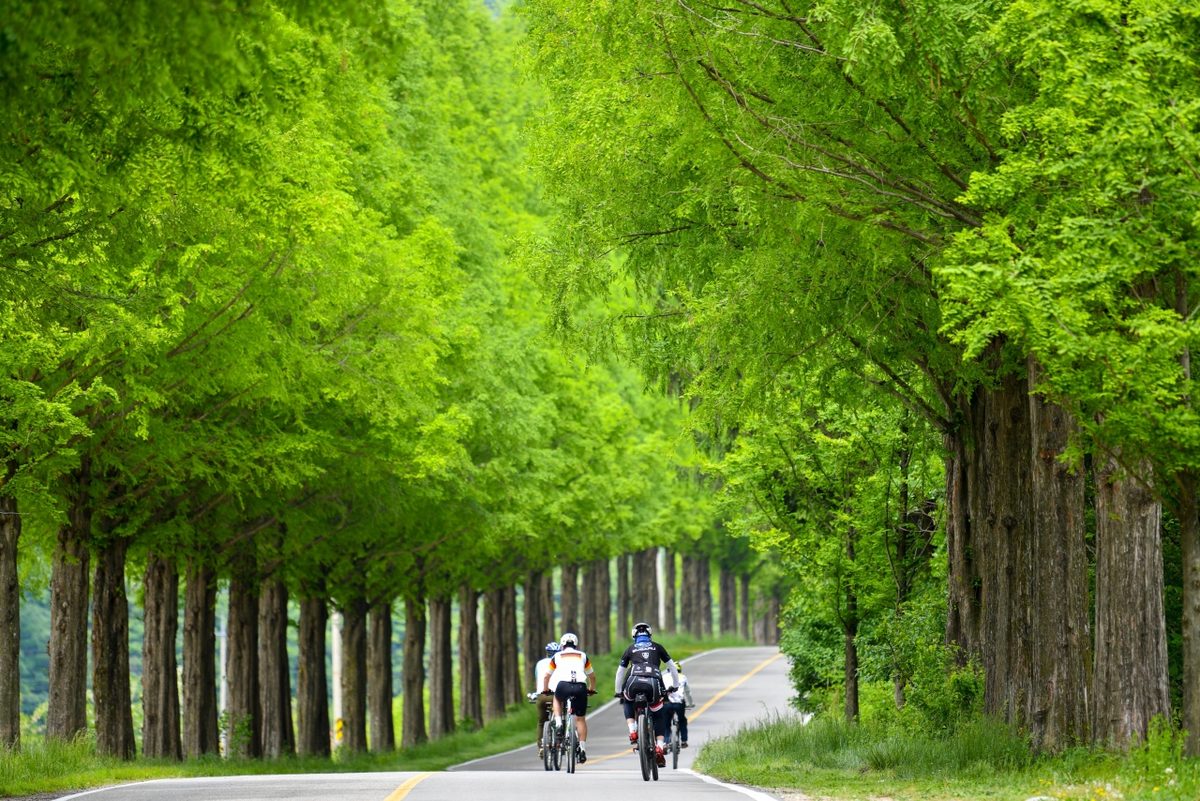
Peak colour shifts by one to two weeks from year to year depending on temperatures and the daily temperature range. Across multiple trip reports and travel guides, however, Metasekwoia-gil broadly follows the same pattern: colour begins around early November and reaches its peak in mid-November. A widely repeated rule of thumb is that the most vivid display arrives roughly two weeks after the first leaves turn. One documented visit on 14 November found conditions at more than 80 percent of peak. Because southern-region foliage runs two to three weeks behind the greater Seoul area, a mid-November visit still offers a full golden tunnel.
How to Walk Metasekwoia-gil
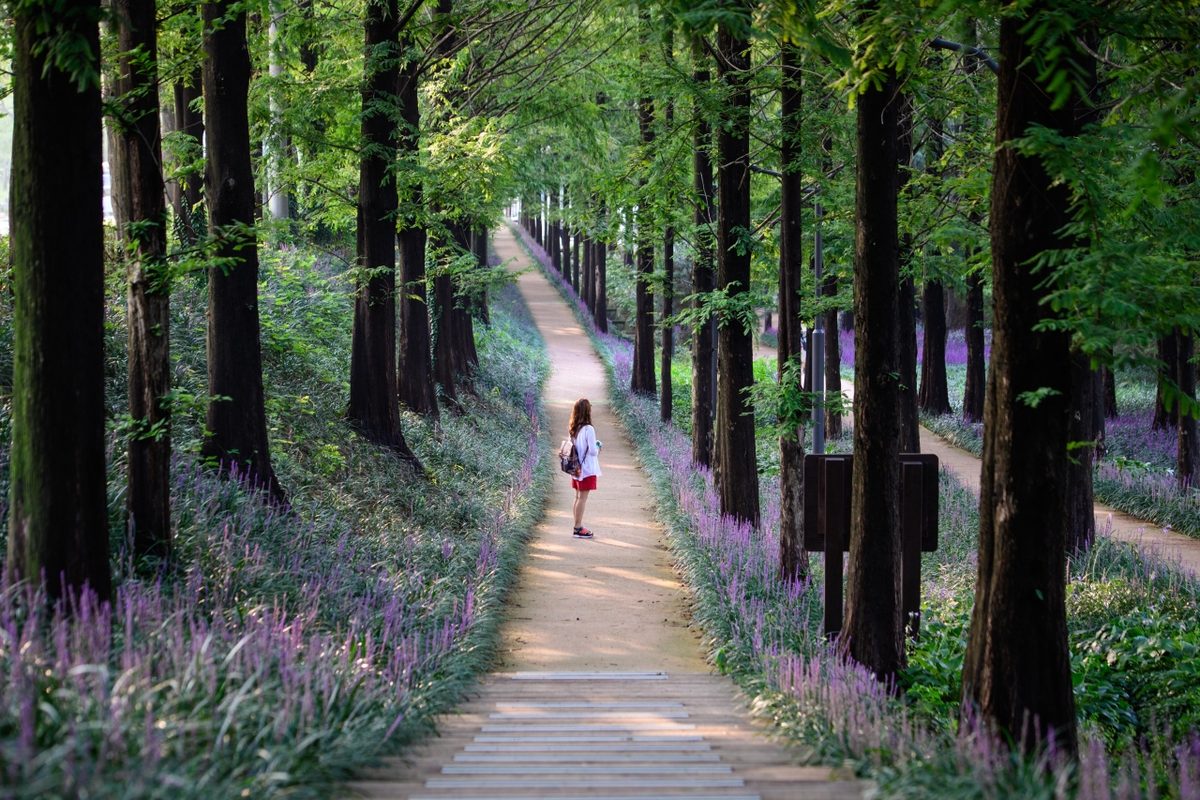
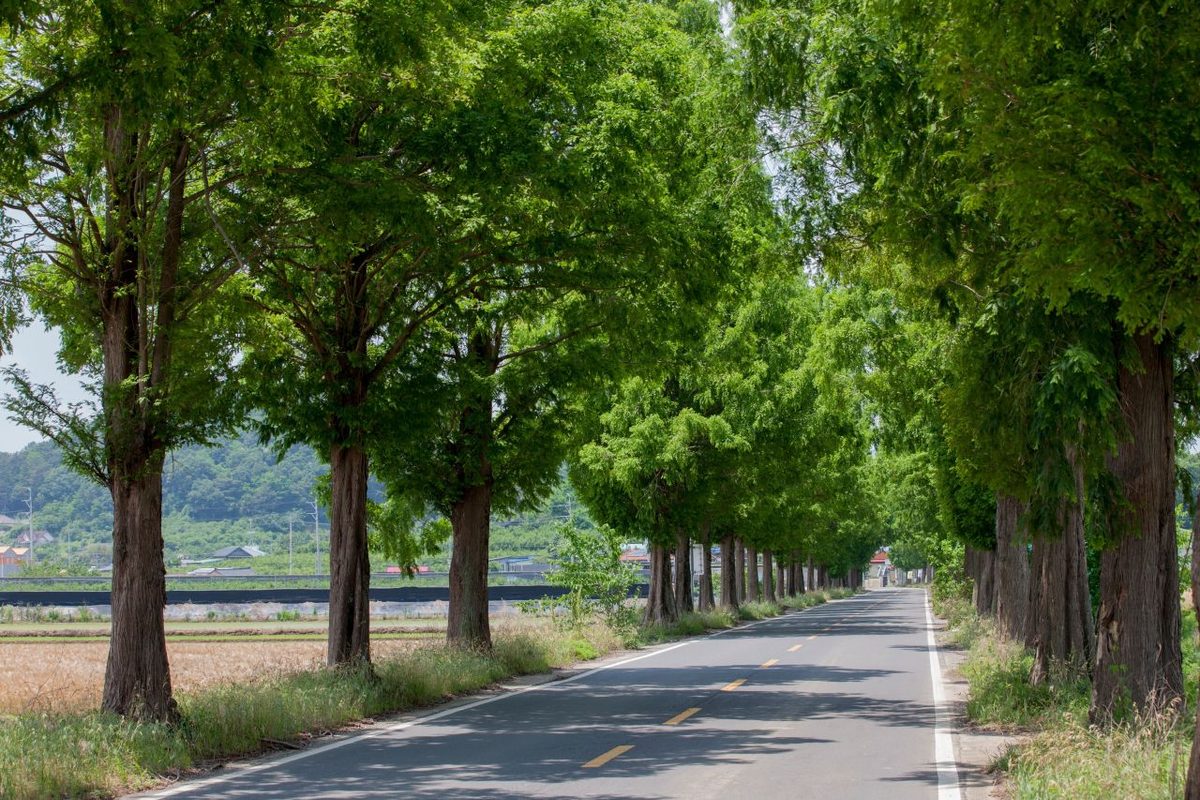
The road divides into two sections: a free, tree-lined stretch running alongside the public road, and a paid walking course within Metasequoia Land (메타세쿼이아랜드), centred on the Hakdong-ri area. The paid section is closed to vehicles and laid out as a dedicated footpath. It draws the largest crowds precisely because the canopy density and upkeep are considered the finest along the entire avenue. The surface is uneven and closer in texture to a trail than a paved path, so trainers or walking shoes are a better choice than flat fashion footwear.
Other Damyang Stops Worth Combining
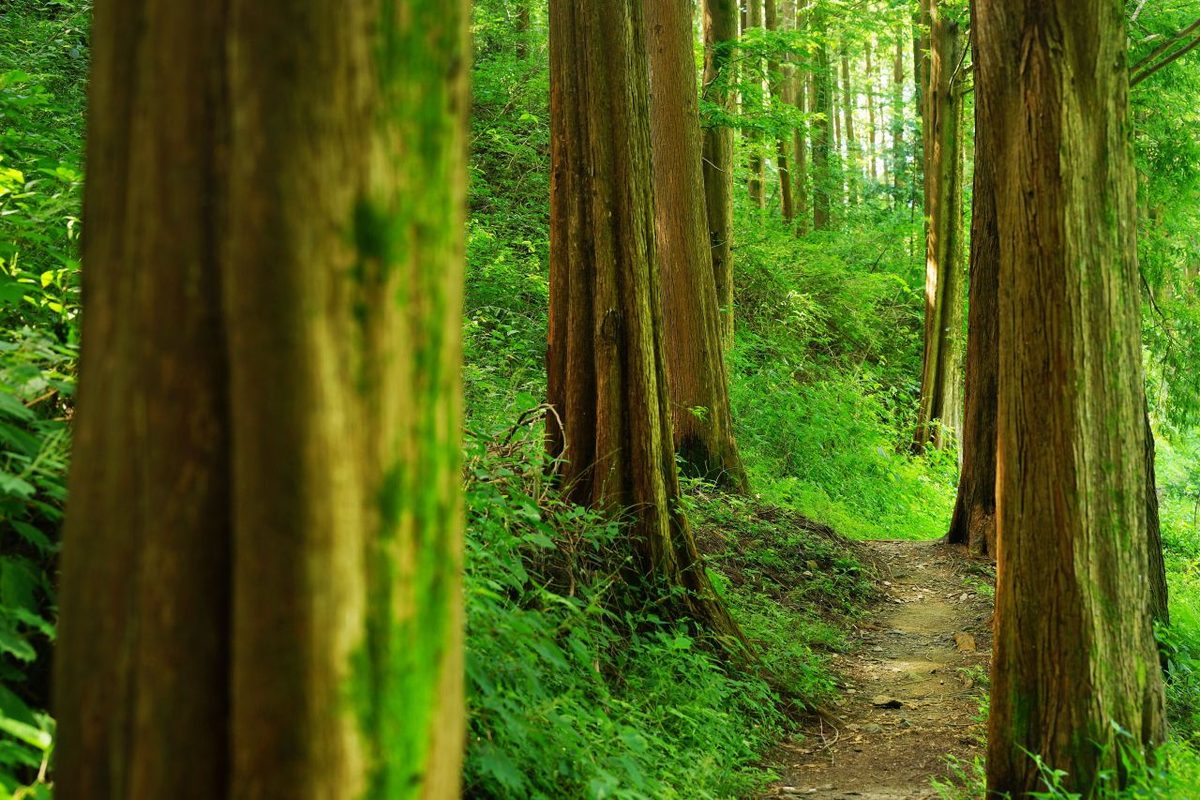
Damyang rewards more than a single stop. Juknokwon (죽녹원) is a bamboo-grove walking course whose green canopy holds its colour through autumn, creating a quiet contrast with the surrounding foliage. Gwanbangjerim (관방제림) is a free riverside promenade lined with trees several hundred years old — a slower, more contemplative mood than the main metasequoia avenue. The Damyang Noodle Street (담양 국수거리) sits nearby, and a bowl of warm guksu before or after a walk has become a natural part of the visit for many travellers.
Tips Before You Go
Weekend mornings during the autumn peak are the busiest windows of the week. If the dawn-mist scene is the goal, an early-morning start is unavoidable; for a straightforward autumn stroll without the crowds, a weekday afternoon is considerably quieter. Around the peak period in mid-November, weekend visitor numbers surge — arriving early on a weekday is the practical alternative. Temperatures drop sharply at this time of year, so a light outer layer is essential.