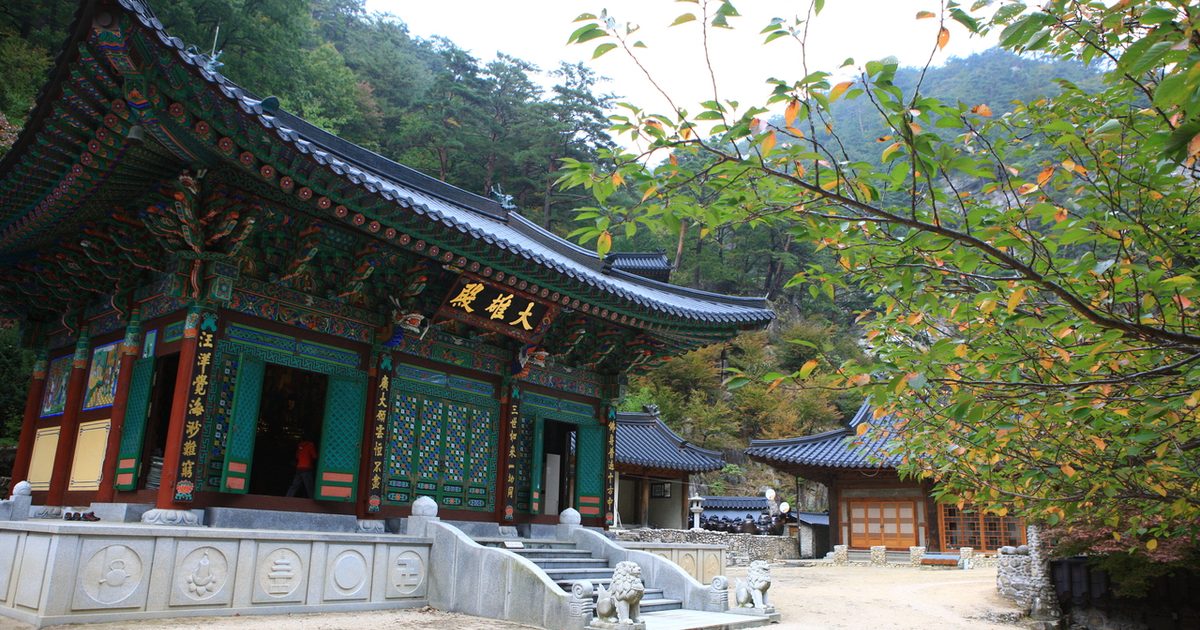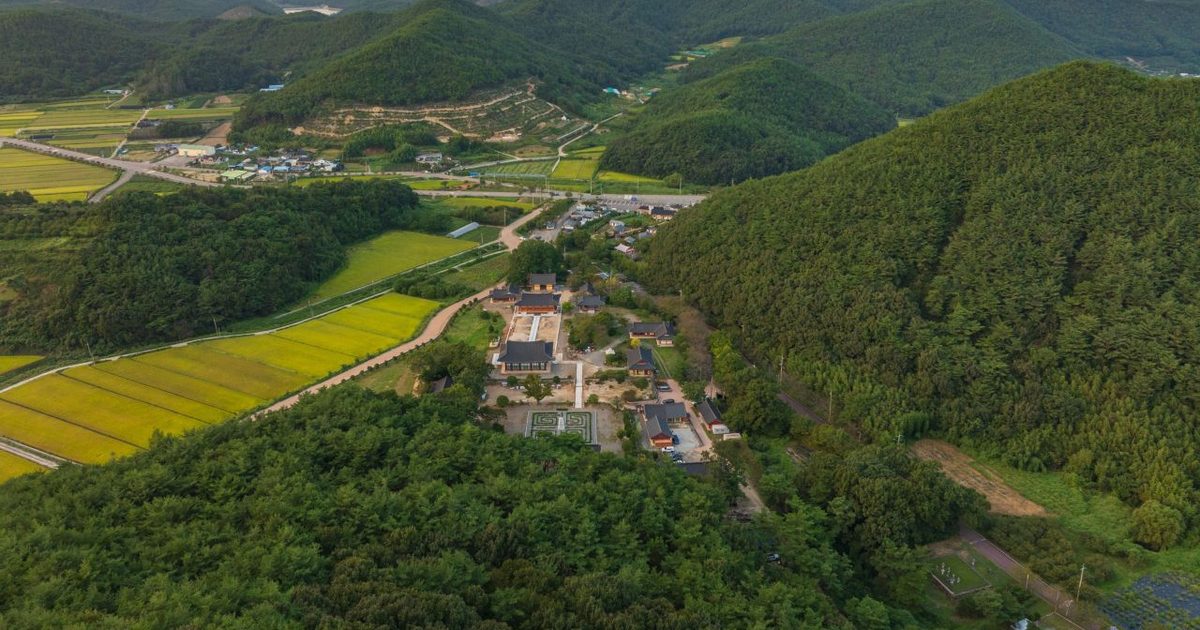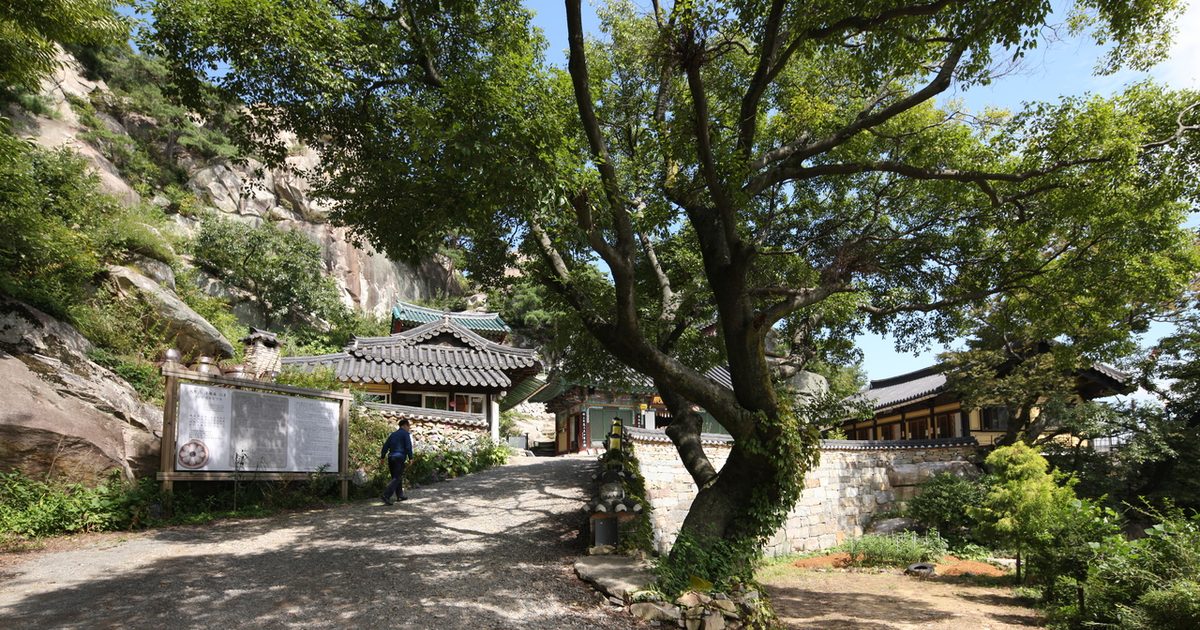
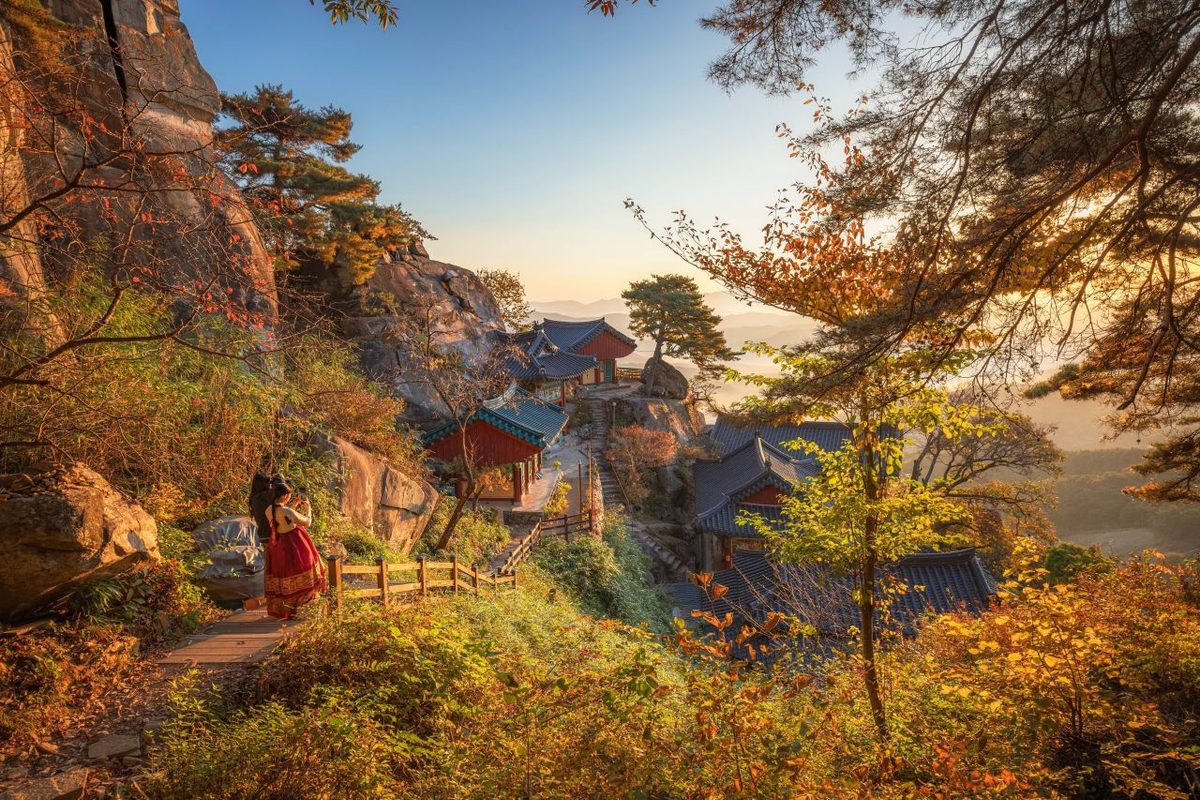
A single hermitage stands at the edge of a cliff. Tucked among the jagged rock formations near the summit of Daeseongsan (593 m) in Sindeung-myeon, Sancheong-gun, South Gyeongsang Province, Jeongtwiram is a place many travellers have never heard of — yet once you know it exists, it is hard to leave off a September itinerary.
Why September
A mountain temple in the height of summer is harder going than it sounds. Humidity and heat rise along the ridgeline and turn every step into a drain. Once you move past early to mid-September, though, the mood shifts entirely. Cool breezes begin to move through the mornings and evenings, the deep green wrapped around the hillside slowly intensifies, and the contours of the cliff peaks come into sharper relief. Daeseongsan has long carried the nickname *Sogeumgang* — Little Geumgang — a nod both to its striking terrain and to a legend from the reign of Silla King Sinmunwang, when the light of Amitabha Buddha is said to have illuminated this very spot, lending the mountain's nickname a Buddhist dimension alongside its scenic one. Unlike the Sogeumgang in Gangwon Province, crowds have not yet found this place, which means September is exactly the right moment to stand quietly beneath the rock spires.
About Jeongtwiram
Jeongtwiram was founded in the sixth year of Silla King Sinmunwang's reign by the Venerable Uisang (625–702). It was designated Traditional Temple No. 83 in 1988 and is listed as the eighth of Sancheong's Nine Scenic Spots. Unlike well-known large temples, the complex is intimate in scale — and that intimacy is precisely its appeal. The main halls are arranged in tiers against a backdrop of towering rock cliffs, so each step upward opens a fresh view. Climb the stone stairs past Wontongjeon Hall and you reach Eunginjeon Hall and the Mountain Spirit Shrine; a little further on, an unobstructed viewpoint waits. On a clear day, the layered fields and ridgelines of the Sancheong area spread out in a sweeping panorama.
Getting There
The address is 675-87 Duncheolsan-ro, Sindeung-myeon, Sancheong-gun, Gyeongsangnam-do. The hermitage is open year-round with no set closing days; for enquiries, call 055-972-3339. Public transport connections are limited, so travelling by car is the practical choice. From Jinju or Sancheong-eup the drive takes roughly 30 to 40 minutes, depending on road conditions — confirm the exact route with a navigation app before you set out.
What to Know Before You Visit
**Admission fees** — No official admission information is currently available. Contact the hermitage directly before your visit or check on arrival.
**Trail conditions** — The lower approach to the complex is reasonably well maintained, but the path becomes an earthen forest trail higher up. Take care after rain, when surfaces can be slippery. Hiking boots or trail shoes are recommended.
**Avoiding crowds** — A weekday morning is your best bet if you want the place to yourself. On weekend afternoons, hikers and day-trippers converge on the narrow mountain paths and it can feel busy. An early-morning ascent to enjoy the views before heading back down is particularly worthwhile.
**Nearby** — Duncheol Ecological Park and Seonyu-dong Valley are often mentioned as nearby add-ons. Both are worth considering for the afternoon after descending from Jeongtwiram; check a map in advance to plan your route and allow plenty of time.
Jeongtwiram on Daeseongsan is easy to keep filing away as a 'someday' destination. But a thousand-year hermitage on a rocky cliff, a cool September breeze, and paths that are still unhurried — the window when all three come together is shorter than it seems.