On a blazing August afternoon, the drive toward Samjang-myeon in Sancheong-gun, South Gyeongsang Province begins to change the closer you get to Jirisan. The air through the window turns cool, and the sound of rushing water reaches your ears — a sure sign you're almost there.
What Is Daewonsa Valley?
Daewonsa Valley (대원사계곡) lies in the Pyeongchon-ri area of Samjang-myeon, Sancheong-gun, South Gyeongsang Province. A clear stream originating from the northeastern slopes of Cheonwangbong — Jirisan's highest peak — flows down through a long, narrow gorge. The valley was originally known as Yupyeong Valley (유평계곡), named after the nearby village, but took its current name from Daewonsa, a Buddhist temple regarded as one of Korea's three foremost meditation centers for bhikkhuni (ordained Buddhist nuns). The valley holds the designation of the 2nd Scenic Spot among Sancheong's Nine Views (산청 9경) and falls within the Yupyeong Valley zone of Jirisan National Park. Long celebrated for its mountains and water, it is consistently ranked among the top summer retreats in Sancheong.
Why August?
When Korea's well-known valleys are packed with summer crowds, Daewonsa Valley remains comparatively uncrowded — largely because it takes a bit more effort to reach. As the valley sits inside Jirisan National Park, access regulations are in place to protect the natural environment, and visitors are permitted to enter the valley for a set period each summer. Before you go, confirm that year's opening dates with the Sancheong-gun Culture and Tourism Division (055-972-7771) or the tourist information line (055-970-7201~5).
What to See and Do
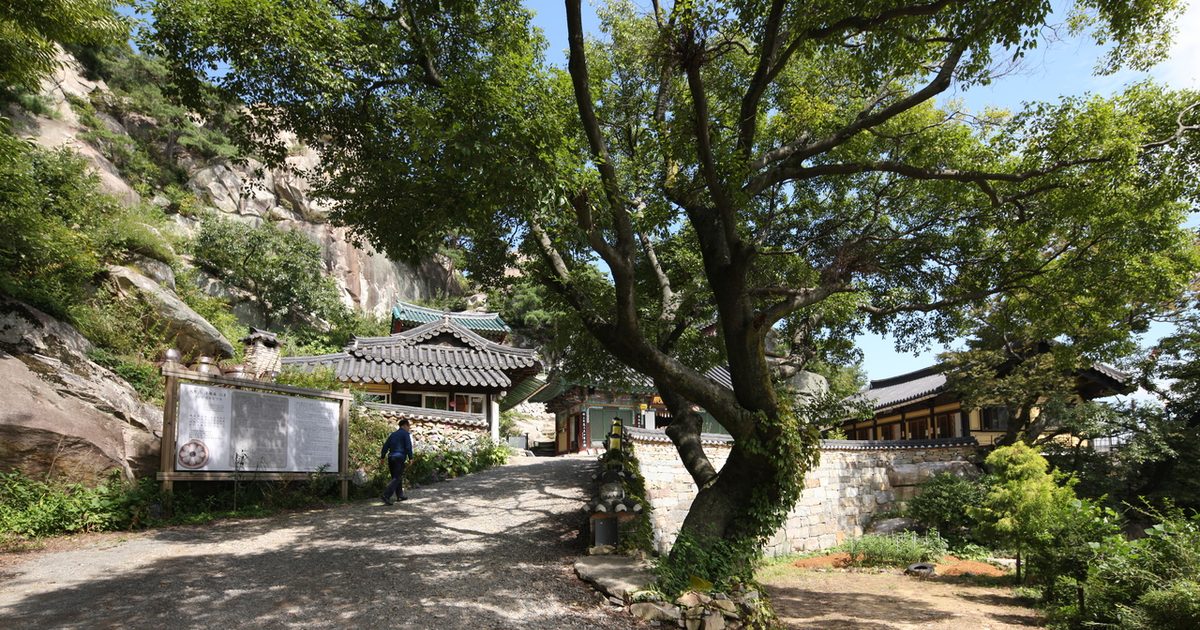
Beyond the scenery of the valley itself, the main draw is the trail that follows the stream all the way to Daewonsa temple. Walk the path through dense forest and the sound of the water stays with you the entire way. Daewonsa is a historic temple founded during the Silla period and is associated with the footsteps of the Venerable Seongcheol, one of Korea's most revered modern monks. Inside the temple grounds stands a multi-story stone pagoda — designated a National Treasure — notable for its striking reddish hue. The area around the Sarijen (舍利殿) hall is an active monastic practice space, so quiet, respectful conduct is expected. Many visitors also cite takjok — the simple act of sitting at the stream's edge and cooling your feet in the clear, cold water — as one of the most genuinely restorative things you can do here.
Getting There
Daewonsa's address is 455 Daewonsa-gil, Samjang-myeon, Sancheong-gun, South Gyeongsang Province. Enter "대원사" or "Daewonsa" into a Korean navigation app and it will route you directly. A private car is far more practical than public transport. A free dedicated car park is available at Daewonsa, but it fills up quickly during peak season — plan to arrive early in the morning. If the main lot is full, you can park near the Iljumun (temple entrance gate) and walk in from there. There is no admission fee.
What to Check Before You Visit
Because the valley is inside Jirisan National Park, swimming and bathing are prohibited. Entering deep-water sections and diving are also not permitted. The intended use is light foot-cooling (takjok) and rest in the surrounding area. The sections open to visitors and the permitted dates can change from year to year, so check the latest information through official Sancheong-gun channels before making plans. On summer afternoons the valley tends to get busier, so setting off early in the morning will make for a far more comfortable visit.