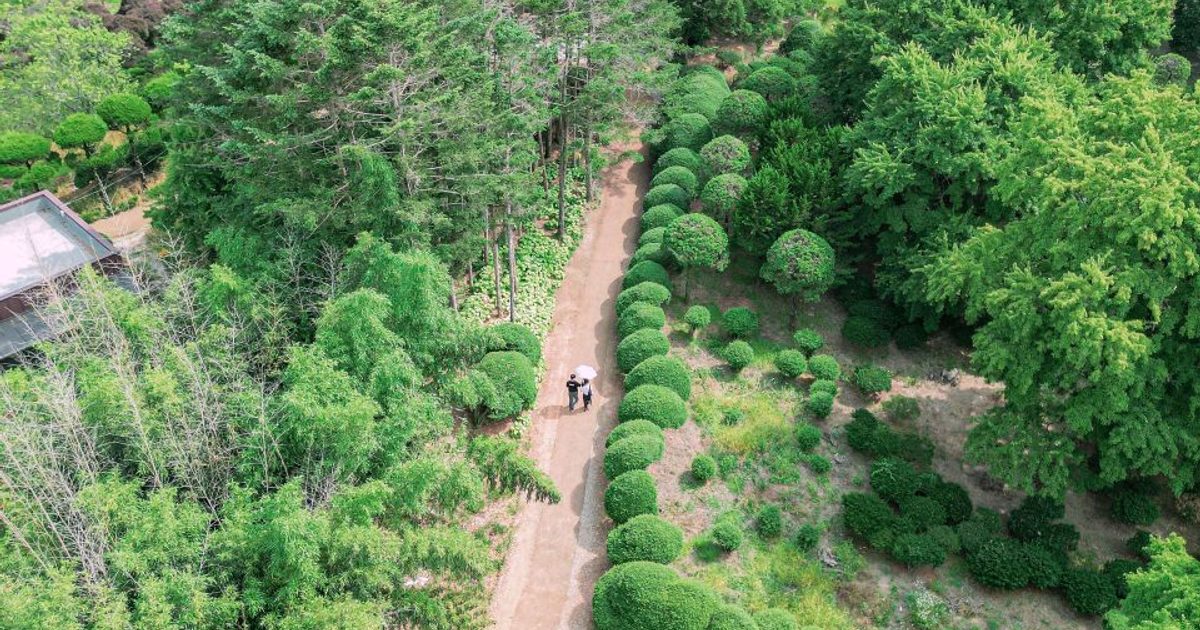
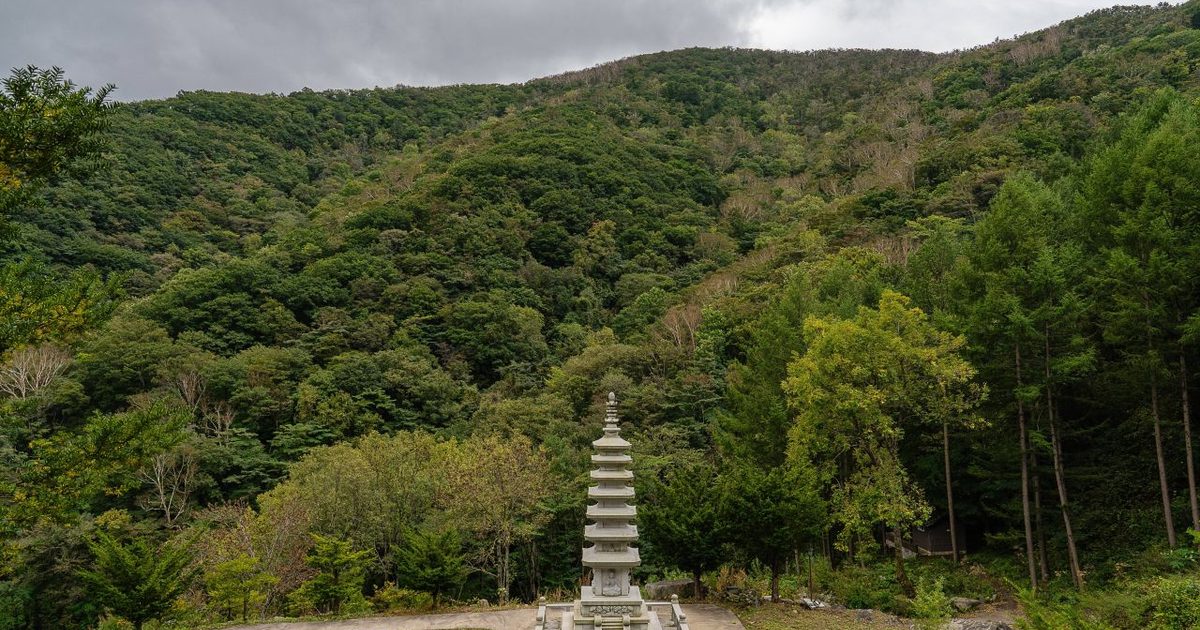
Tucked into the foothills of Noaksan mountain in Sangju, North Gyeongsang Province, Namjangsa Temple holds an unexpected surprise in August. Standing at the center of the temple grounds is a single crape myrtle tree, its branches heavy with deep crimson blossoms, facing the weathered wooden halls that have stood here for centuries. There is no elaborate flower garden, no grove of hundreds of trees — just one tree, and yet it transforms the entire atmosphere of the temple.
Why August Is the Time to Visit
The crape myrtle is commonly called *mokbaengnirhong* (木百日紅) in Korean — literally "tree of a hundred days of red" — a name earned because the flowers remain in bloom for roughly 100 days without falling. The tree is also known by the nicknames *ganjirum namu* (tickle tree) and *mideuleum namu* (slide tree), and by the Sino-Korean name *jamihwa* (紫薇花). Its smooth bark and sinuous trunk give it a distinctive silhouette even in winter, but its true peak is unmistakably July and August. Across Korea, crape myrtles reach their most vivid bloom in August, and the single tree on the Namjangsa grounds follows that rhythm, opening its crimson flowers fully at this time of year.
The contrast between the ash-grey of the clay roof tiles, the solid weight of the stone walls, and the deep red of the blossoms creates a sensory scene that is difficult to capture even in photographs. At the base of the walls, red spider lilies (*sangsahwa*) also flower alongside the crape myrtle, completing a color palette that belongs to Namjangsa in summer alone.
What to See at Namjangsa
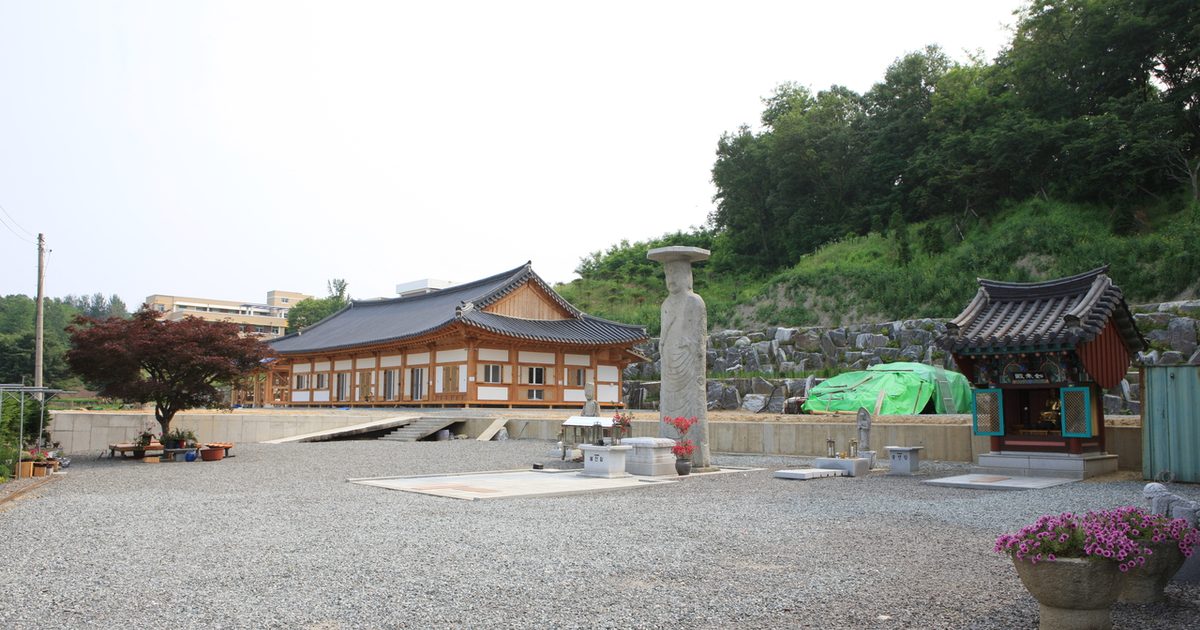
Namjangsa Temple is free to enter and open to all visitors. Passing through the main gate (*iljumun*), you are greeted by a venerable zelkova tree standing at the path's edge, with the temple's halls arranged neatly around the central Bogwangjeon main hall. The grounds are intimate in scale — a slow, unhurried walk takes about 30 minutes to cover everything.
The temple holds several nationally designated cultural treasures, so visitors with an interest in Buddhist culture will find it worth reading the information panels inside each hall. Explanatory signage is posted throughout the grounds, making the art and architecture accessible even to those unfamiliar with Buddhist traditions.
Getting There
Namjangsa Temple is located in Namjang-dong, Sangju-si, North Gyeongsang Province. By public transport, the most practical options are catching a rural bus (*nongeochon beoseu*) toward Namjangsa from Sangju Intercity Bus Terminal, or taking a taxi from Sangju Station on the Gyeongbuk Line. By car, entering "남장사" (Namjangsa) into any navigation app will guide you directly to the access road. Parking is available near the temple, and Namjanggye-gok stream runs alongside the approach road the entire way — making the drive itself a refreshing experience in summer.
Pre-Visit Checklist
**Crape myrtle bloom period:** The nationwide peak is July to August each year. Exact timing shifts slightly depending on annual weather conditions, so checking recent visitor posts on social media or travel blogs about a week before your trip is a reliable way to gauge the current state of the blossoms.
**Admission:** Free. There is no entrance fee of any kind.
**Avoiding crowds:** Weekend daytime hours tend to draw visitors who come specifically to photograph the tree. Arriving early in the morning or on a weekday afternoon gives you more space and time in front of the crape myrtle.
**Combining with nearby sights:** Namjanggye-gok stream flows parallel to the temple's approach road and is a pleasant place to cool off from the summer heat. Stopping to wade in the stream or take a short walk along its banks before or after visiting the temple rounds out a natural half-day itinerary.
Every August, there are people who make the trip to Sangju specifically to see one crimson tree. It is not a dramatic attraction or a busy tourist destination. A monastery holding a thousand years of history, and a single tree that holds its flowers for a hundred days — in August, that is exactly what makes Namjangsa worth the journey.