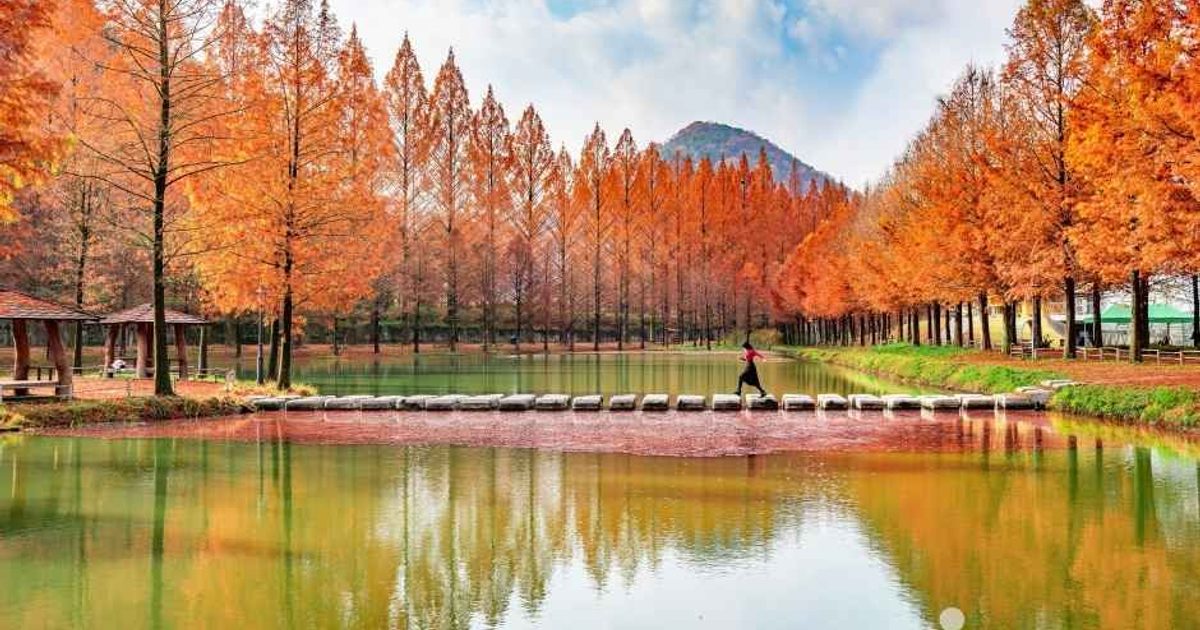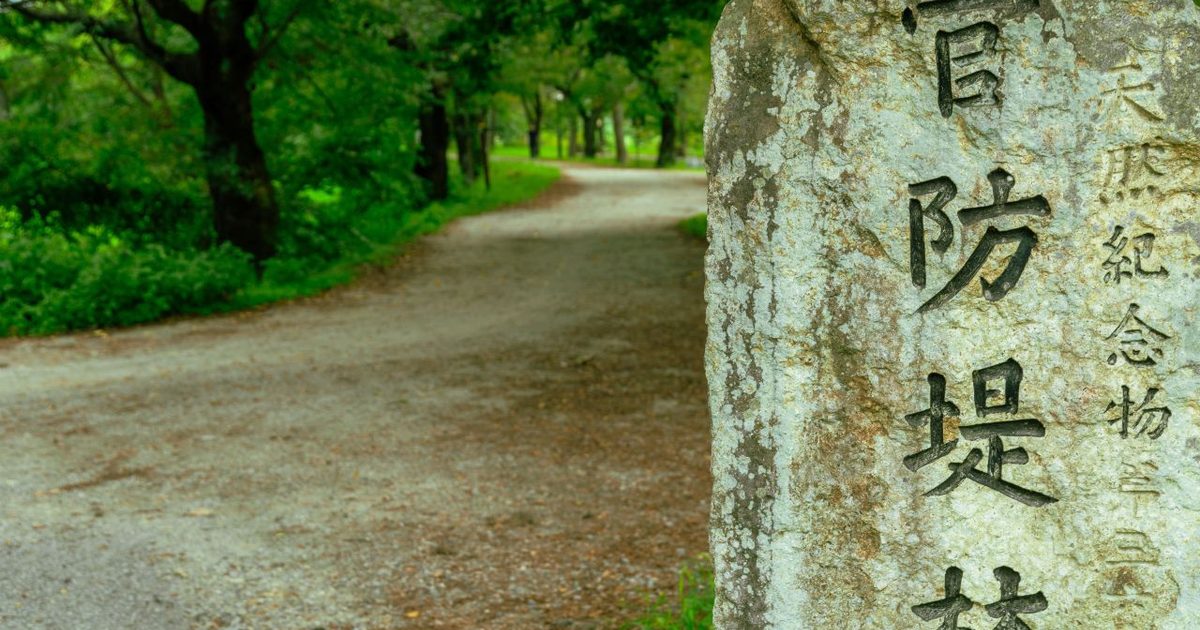
If you leave Damyang having seen only Juknokwon, you have seen only half of it. Running alongside Gwanbangcheon stream through the heart of Damyang-eup, Gwanbangjerim is a roughly two-kilometre forest embankment lined on both sides with trees hundreds of years old. It waits quietly behind the more celebrated bamboo path — a different, unhurried face of Damyang. Every October these ancient trees begin to change colour one by one, drawing walkers naturally into a tunnel of golden light.
Why October
The trees that make up Gwanbangjerim are predominantly deciduous broadleaves — Aphananthe aspera (pujo-namu), hackberry (paeng-namu), cherry (beot-namu), and oriental white oak (galcham-namu), among others. Because they are not evergreens, the forest changes character with every season, and autumn is its most dramatic. As October arrives, the trees lining the embankment begin to colour gradually; their wide canopies close over the path and form a distinctive golden tunnel. When the autumn hues reflect off the surface of Gwanbangcheon below, it becomes clear why this spot has quietly held a place on long-standing autumn foliage lists. Precisely because it is not widely publicised, Korean travellers themselves tend to refer to it as a hidden gem.
What Gwanbangjerim Is
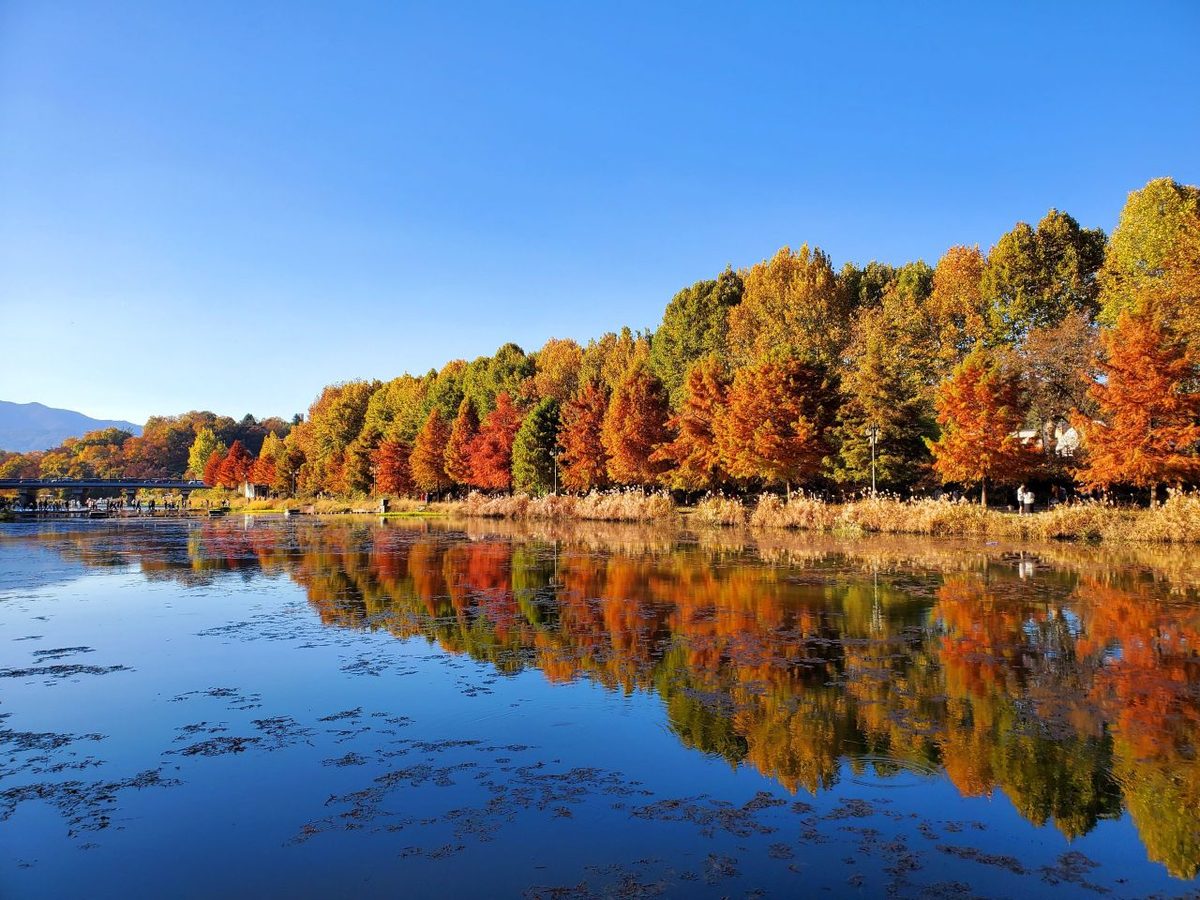
Gwanbangjerim is a scenic forest planted along the northern embankment of Daeyangcheon stream as it curves around Damyang-eup, stretching about two kilometres. More than 420 trees grow here, including 111 Aphananthe aspera, 18 hackberry, and 9 cherry trees, alongside kalopanax, Korean hornbeam, cornel dogwood, and oriental white oak. The trunk circumference at chest height ranges from one metre to 5.3 metres, giving a sense of the scale of these trees. Within the area designated as a Natural Monument, 185 old-growth trees have been recorded. The sight of these broad-girthed giants standing shoulder to shoulder along the embankment and closing out the sky is a scale difficult to find at other autumn foliage sites.
How to Walk It and What to Do Nearby
Gwanbangjerim follows a flat embankment path, making it a straightforward walking course. Taking the full two-kilometre stretch at a leisurely pace lets you experience the full range of colour the autumn foliage creates. Using the riverside path on the opposite bank of Gwanbangcheon as well allows you to view the forest from a different angle. Because Gwanbangjerim connects naturally toward Damyang's Metasequoia Road (Metasekwoia Garosu-gil), many visitors link the two routes into a single walk. Damyang's noodle street (guksu-geori) is also close by, making it easy to grab a meal after your stroll.
Before You Go
Gwanbangjerim has no admission fee and is open year-round with free access. If you are travelling by public transport, it is within walking distance of Damyang Public Bus Terminal. Visitors arriving by car can use a nearby public car park. October weekends bring larger numbers of travellers to the Damyang area, so setting out early in the morning lets you enjoy the forest path at a more relaxed pace. The route is entirely flat, making it comfortable for all ages and suitable as a family destination. Peak foliage timing varies from year to year depending on weather conditions, so it is worth checking the current foliage status and forecast before you visit.