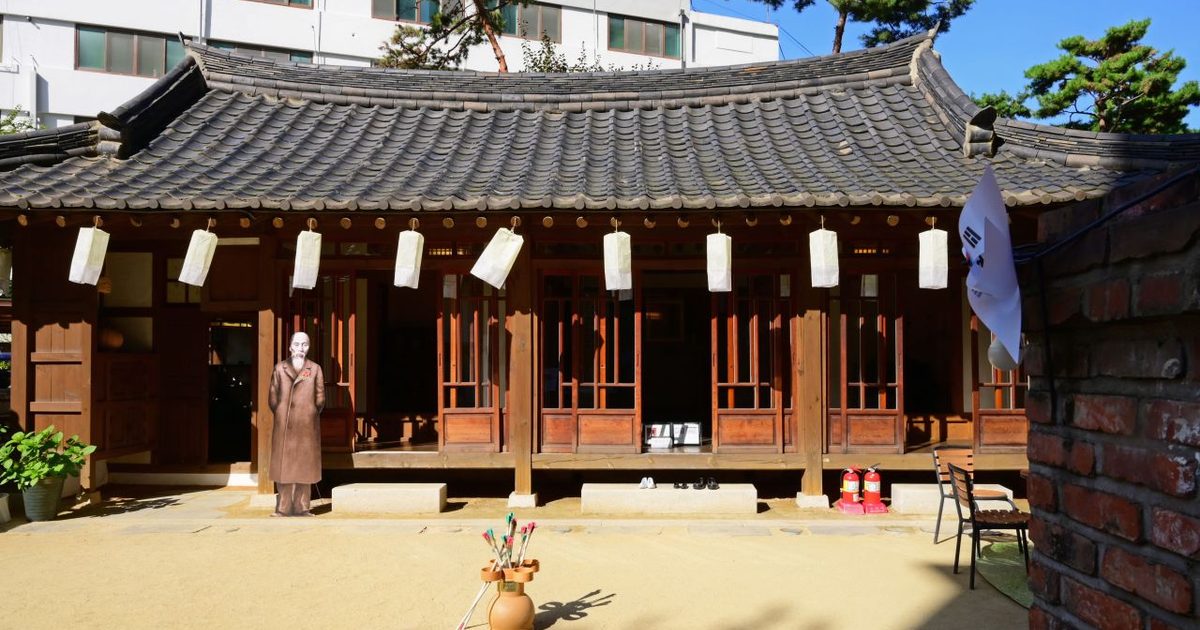
Strolling through the back alleys of Junggu in Daegu, a few steps off the main street, a low tiled roof comes into view. This is Seo Sangdon Historic House (서상돈 고택). There is no admission fee and no reservation required — you simply walk in. In October, autumn light falls across the old lane and the mood of a history walk takes on a character all its own.
The Story the House Holds
Seo Sangdon was a merchant who built his fortune in the late Joseon period. On February 16, 1907, at a meeting of the Daegu Gwangmunsa (Daedong Gwangmunhoe) association, a single remark he made changed history. He proposed that Koreans give up tobacco in order to repay the national debt of 13 million hwan — the sum the Korean Empire owed Japan at the time. His calculation was straightforward: if 20 million citizens went without cigarettes for three months and each saved 20 jeon, the debt could be cleared. At the meeting itself, members immediately pooled more than 2,000 hwan on the spot, and the spark — fanned by the nationalist press — spread into a nationwide National Debt Repayment Movement. Japanese interference ultimately prevented the goal from being reached, but for roughly a year, people from all walks of life took part voluntarily, and the campaign stands as a landmark of popular civic action.
Walking through the house with that story in mind, the air in the courtyard feels subtly different. More than any exhibit, the single fact that this man lived in this yard tends to stay with you longest.
Why October
The house is open year-round, but October is an especially good time to walk here. Daegu Modern Alley Course 2 — running roughly 1.64 km from Cheongnangnyeok (Cheongna Hill) through Gyesan Cathedral and Yi Sanghwa Historic House before ending at Seo Sangdon Historic House — takes about two hours to cover in full. Once the fierce summer heat of Daegu has eased and autumn sunlight spreads evenly over the tiled roofs and stone walls, this route offers an unexpected sense of calm in the heart of the city.
The standard itinerary pairs Seo Sangdon Historic House with the adjacent Yi Sanghwa Historic House next door. The two properties are separated by a single wall, so you can move between them and picture a time when a poet of resistance and a nationalist merchant lived side by side in the same lane.
Getting There
The house is within a five-minute walk of Exit 18 at Banwoldang Station on Daegu Metro Line 1. The location is easy to reach on foot, so public transport is preferable to driving. There is no parking at the house itself; if you do come by car, plan to use a paid lot nearby.
Before You Visit
Admission is free. Opening hours are generally stated as 10:00 am to around 5:30 pm, though the exact time varies slightly depending on the source. If the gate is closed when you arrive, the visit is wasted, so it is worth calling ahead on the day — the contact number is 053-256-3762. The house is closed on Lunar New Year's Day and Chuseok Day.
Every Saturday, a free guided tour of Modern Alley led by a cultural docent departs at 10:00 am and 2:00 pm. The commentary goes considerably deeper than a self-guided walk, so a Saturday visit is worth planning for if your schedule allows. Hours and formats are subject to change, however, so confirm again before you go.
If you are planning a trip to Daegu in October, Seo Sangdon Historic House makes a natural starting point for a half-day route. No entry fee, just a walk down an old alley — and one more layer of history underfoot.