Deokjin Park in Jeonju is best known for its lotus flowers, which reach their peak in mid-July, carpeting the pond in blooms that change day by day. Yet paradoxically, September — after that peak has passed — can be a better time to actually walk the park properly.
Why September in Particular
At the height of summer, crowds drawn by the lotus display pack the paths, and the midday sun beats down almost vertically. A single lap around the pond can feel more like an endurance test than a stroll. September changes the mood noticeably. The breeze turns genuinely cool, the tree canopy starts doing real work, and the full circuit around the pond becomes something you can enjoy at your own pace without heat cutting the walk short.

Water lilies and lotus flowers are still in bloom through August and September — the season's end doesn't mean the flowers disappear entirely. Instead, the density of the colony thins out, and the pond itself becomes the attraction: broad lotus leaves spreading across the water in every direction. Adding to the color, crape myrtle trees (baerongnamu) dot the park's walking paths, their pink blossoms lasting from midsummer through September. The crape myrtle is sometimes called the "hundred-day flower tree" in Korean for how long it holds its bloom, and in September it fills patches of the trail with soft pink.
What to See Inside the Park
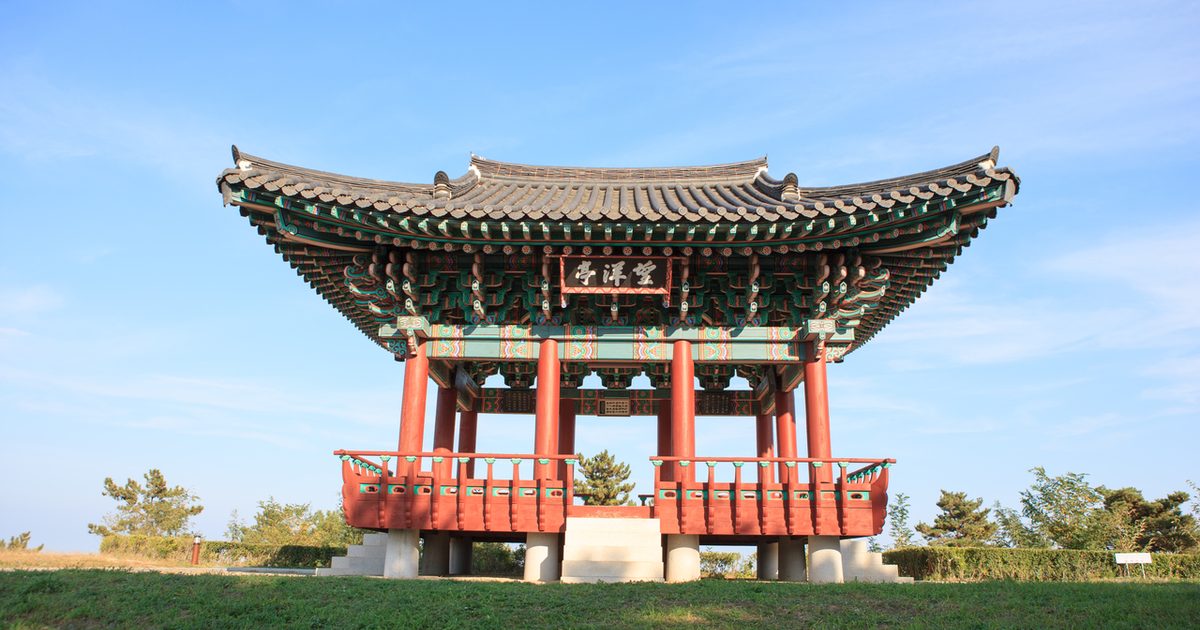
The main route is the path that circles the pond. Standing on Yeonhwagyo (Lotus Bridge), you get an open view across the water, and roughly midway across the bridge a traditional hanok-style structure comes into view. Walking the bridge — essentially a stroll over the pond itself — is one of the park's signature experiences. Scattered around the perimeter are a pavilion, an artificial waterfall, and a wooden footbridge, all easy to visit as you make your way around.

Arriving early in the morning means fewer people and a calmer pond surface. Entry to the park is free, and parking is also reported to be free, making it an easy, low-cost outing. Dogs are welcome, so the park draws plenty of families.
Worth Considering: An Evening Visit
The park has operated evening hours through late August, so early September can still be worth visiting around dusk. That said, evening hours and lighting arrangements can change, so it's worth confirming before you go — call the park or the Jeonju Tourism Information Center at 063-232-6293. The pond at night, when lit, has a completely different atmosphere from the daytime visit.

Getting There and a Few Tips
Deokjin Park is located at 390 Gwonsamdeuk-ro, Deokjin-gu, Jeonju-si, Jeollabuk-do Special Self-Governing Province. It's not far from central Jeonju, and combining it with a visit to Jeonju Hanok Village on the same day is a reasonable plan. Parking is available on site and is reported to be free.
For September, early morning is the most comfortable time to visit: longer shade, lower temperatures, and an easy, unhurried lap of the pond path. If you're coming at midday, bring a hat or a parasol. Note that sections of the park plaza may be disrupted depending on ongoing construction; a quick check of recent conditions before your visit is a sensible precaution.