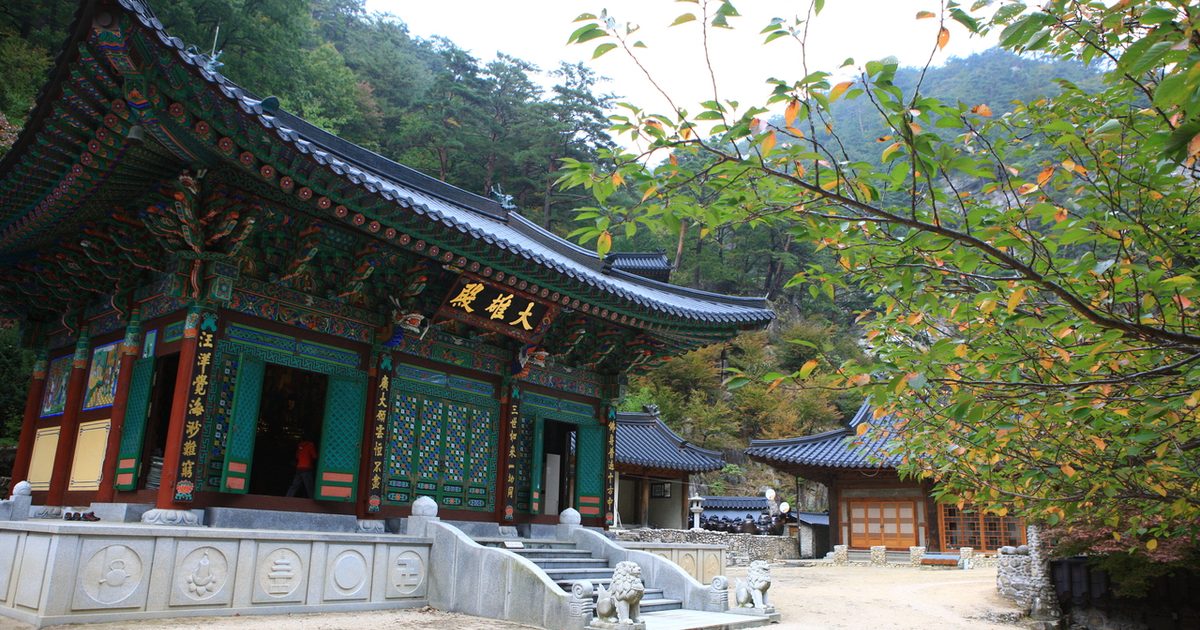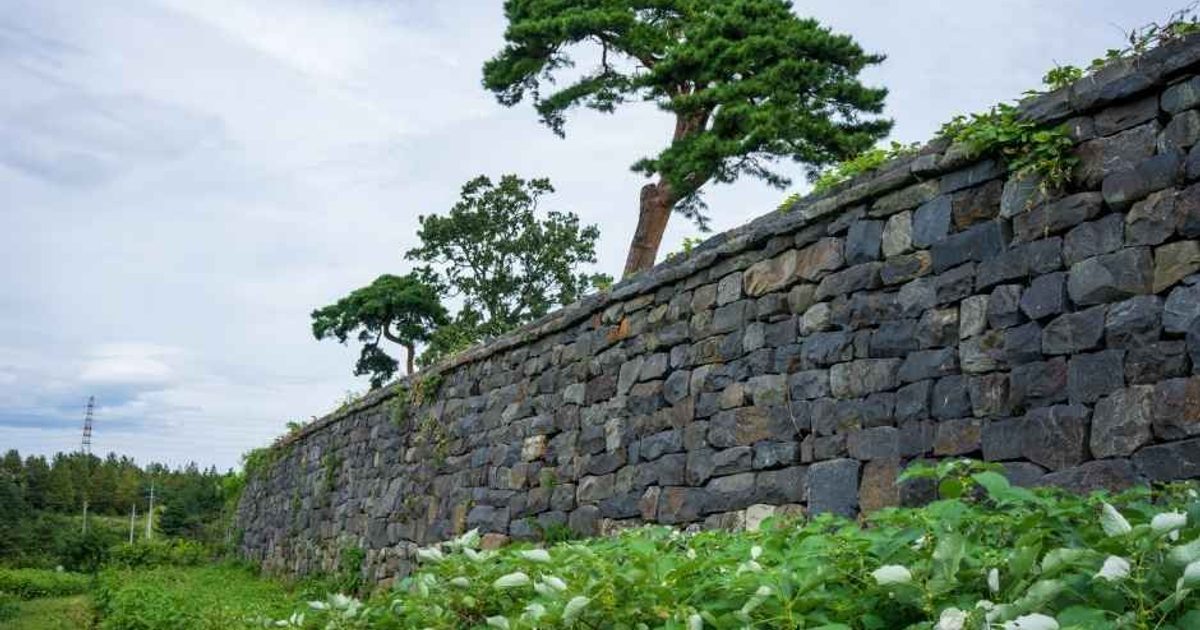
Follow a narrow road through the rice paddies of Nampo-myeon, Boryeong, and a low stone fortress wall appears without warning. There are no tourist-trail banners and no queuing crowds — just a village with a fortress inside it. That is Nampo Eupseong.
Why September
By September, temperatures across the Chungcheong inland drop enough to make walking in direct sun genuinely comfortable. Late-afternoon light falls across the stone walls and turns their surface golden — a quality that is hard to find in midsummer or midwinter. Just beyond the ramparts, the surrounding paddy fields are beginning their own shift toward gold. Walking the walls and watching the color of the plain below change is the defining experience of a September visit to Nampo Eupseong.
What to See
Nampo Eupseong began as Nampo Jinseong, an earthen fortress built in 1390 (the second year of King Gongyang's reign) to defend the West Sea coast against Japanese coastal raids in the late Goryeo period. Under King Sejong's fortress-construction policy known as *chukseong sindo*, it was converted to stone, and the work was completed in 1451 (the first year of King Munjong's reign). The *Munjong Sillok* — the official annals of King Munjong's reign — records the completed dimensions in precise detail: a perimeter of 2,476 *cheok*, a wall height of 12 *cheok*, battlements (*yeojang*) 3 *cheok* high, five *jeokdae* (flanking towers), three gates each fitted with an ongseong (semicircular outer gate enclosure), 337 merlons, and two wells inside the walls. The fact that measurements from roughly 600 years ago survive intact in the annals gives the site an unexpectedly immediate sense of history.
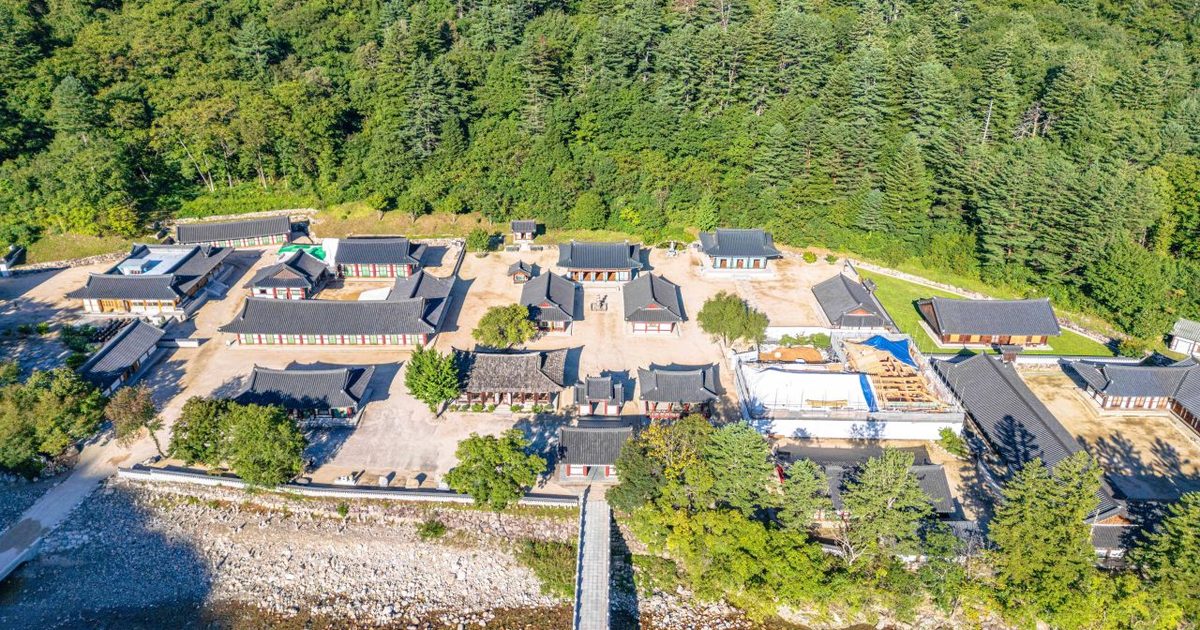
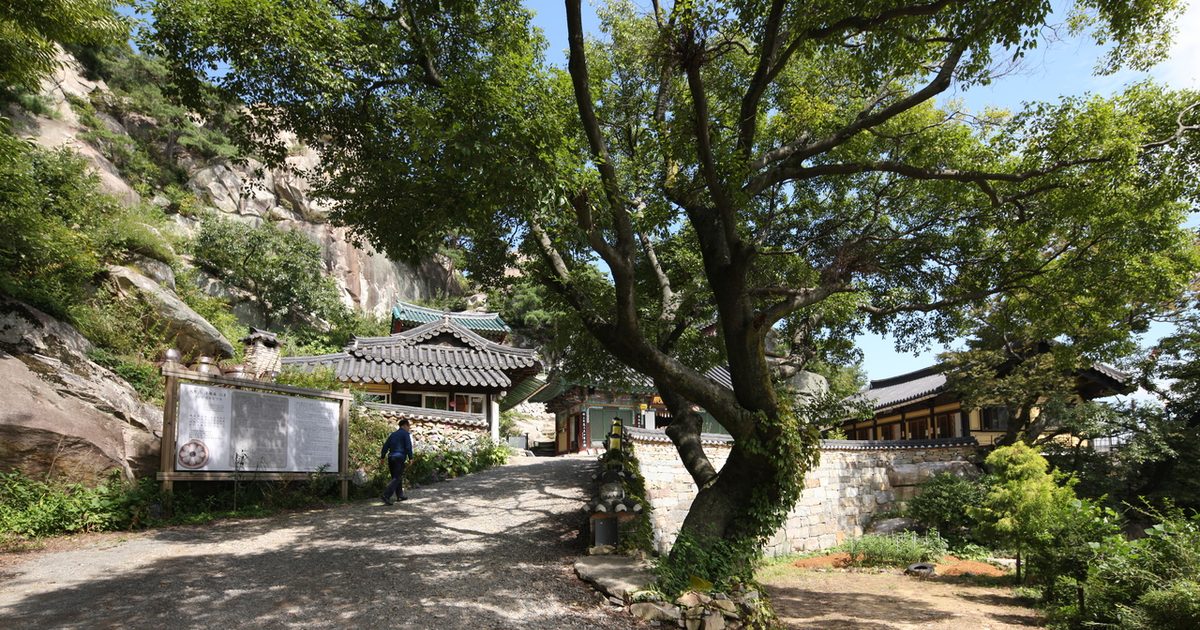
On some of the wall stones you can make out the carved characters **永同 (Yeongdong)** — a place name from what is now North Chungcheong Province. Joseon-era fortress construction used a named-accountability system in which each section of wall was assigned to a specific county, whose name was inscribed on the stones. Those inscriptions are still clearly legible today. Pass them without knowing the context and they are just rocks; know the story and they become something you want to trace with your fingers. Inside the walls, surviving structures include the *dongheon* (the local magistrate's office), Jinseo-ru pavilion, and the Oksan Amun gate, which together give a sense of how a Joseon provincial government compound would have looked.
Getting There
Nampo Eupseong is located in Eupnae-ri, Nampo-myeon, Boryeong, Chungcheongnam-do. By public transport, take a local bus toward Nampo-myeon from Boryeong Intercity Bus Terminal; check the current routes and timetables with Boryeong City's transport information service or a bus app before you go, as schedules can change. By car, the site is within about 20 minutes of Daecheon IC on the West Coast Expressway. On-site parking is limited, so allow extra time to find a spot.
Visitor Tips
No admission fee has been confirmed at the time of writing, but it is worth checking the latest information on the official Boryeong City culture and tourism channels before your visit. A slow circuit of the full wall takes around 30 to 40 minutes. An afternoon visit — rather than a morning one — is recommended: as the sun moves west, it casts shadows across the stone surface and brings out the texture of the walls far more vividly. Nearby Nampo Hyanggyo (a Joseon Confucian school) and Nampo Gwanaamun (the former government compound gate) can be combined into a comfortable half-day itinerary. Crowds are not a concern — even on weekends the site stays quiet.