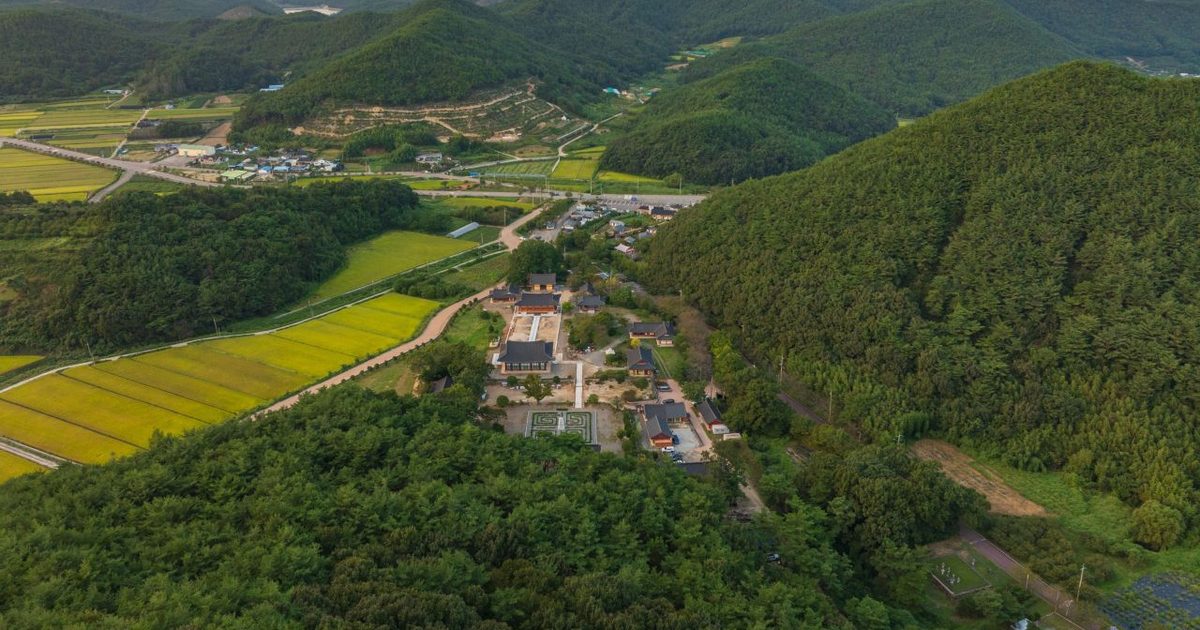
Mireukdaewon-ji is the kind of place that rewards those who seek it out. On a weekday morning, with no tour buses in the large car park and only the sound of insects in the grass, you can walk the temple grounds entirely alone — and understand immediately why it draws those who already know about it.
Why September, and Why Now
September is the most comfortable month to visit Mireukdaewon-ji. The heavy humidity of midsummer has lifted, and cool air drifts down from the slopes of Woraksan. Unlike August, when undergrowth is at its thickest, the view opens up from mid-September onward, allowing you to take in the full extent of the temple grounds — the stone pagoda, stone lantern, and flagpole supports — in a single glance. This is also the brief window just before the autumn color change, when green and gold coexist across the site.
What Makes This Place Unusual — A Temple That Faces North
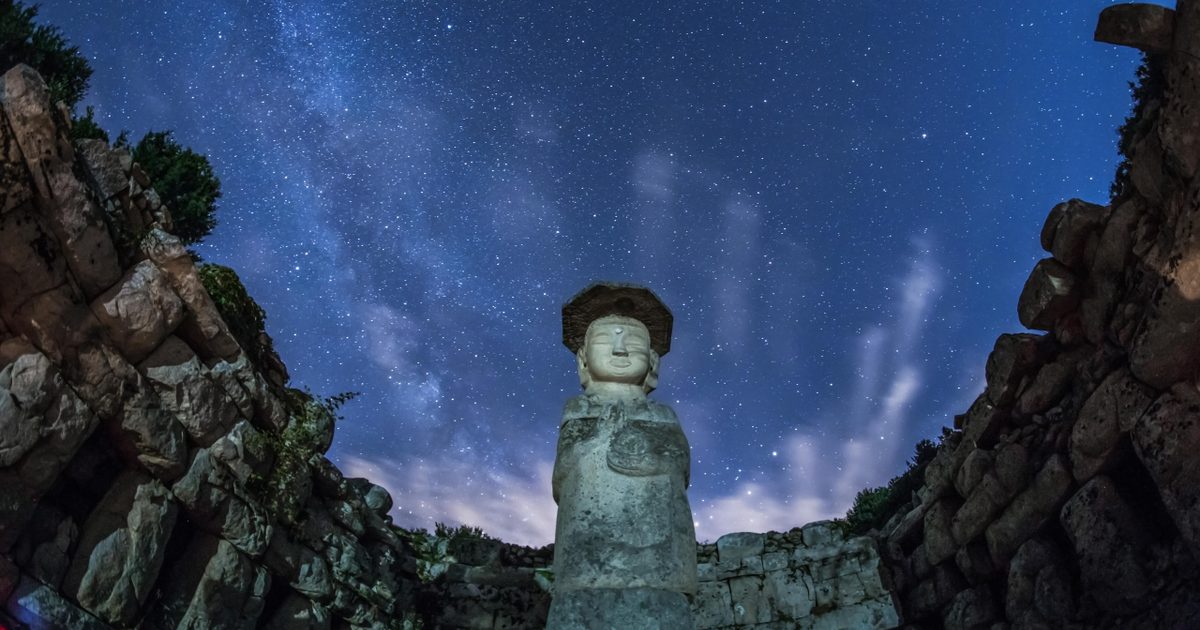
Nearly every Buddhist statue in Korea faces south. Mireukdaewon-ji is the only known exception in the country: its principal image faces north. According to a legend passed down orally, in the final days of the Silla kingdom, Prince Maui and a sibling went their separate ways. The sibling remained on Woraksan, built Deokjusa temple, and carved a rock-face Buddha facing south; Prince Maui constructed a stone cave at the entrance to Haneur-jae pass and oriented it northward — toward Deokjusa — so that the two statues would face each other across the mountain. This story is oral tradition and cannot be taken as established historical fact, but the north-facing orientation of the site is documented and is itself enough to make the place worth the journey.
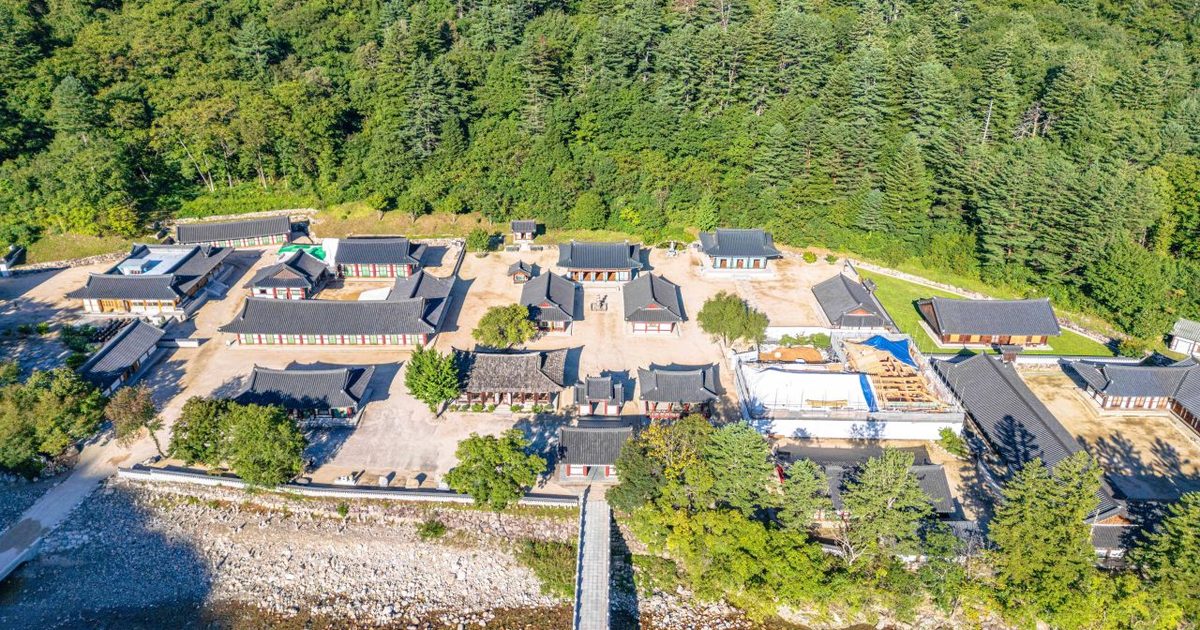
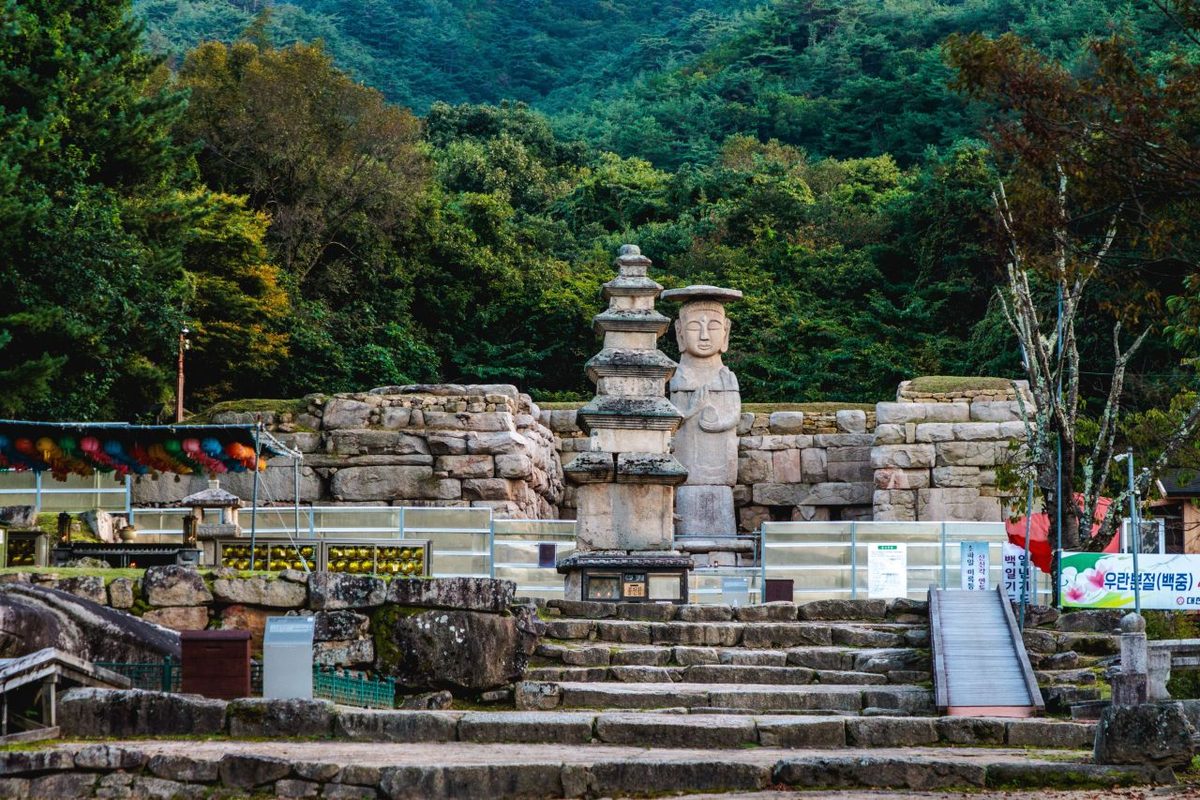
The stone-cave hall is an artificial grotto measuring 9.8 m in length, 10.75 m in width, and 6 m in height, with a standing stone Buddha at its center. Scholars interpret it as modeled on Seokguram Grotto in Gyeongju, combining timber and stone construction in an unusual hybrid method. Outside, the five-story stone pagoda (National Treasure No. 95), a stone lantern, and flagpole supports stand without barriers, allowing you to examine these Unified Silla stone artifacts up close — the kind of encounter that normally happens only in a museum.
From the Temple Grounds to Haneur-jae Pass
A forest path leads from Mireukdaewon-ji toward Haneur-jae pass along a designated history and nature trail roughly 2 km in length. The route follows a level earthen track that requires nothing more than a comfortable pair of walking shoes. Haneur-jae is a mountain pass with a history spanning the Silla, Goryeo, and Joseon periods. If time and energy allow, a there-and-back walk is worthwhile; alternatively, you can explore just the temple site and continue on to Suanbo on the far side for a full day out.
Getting There & Practical Tips
**By car:** Exit the Jungang Expressway at Goesan IC and drive toward Suanbo. The car park at the site is spacious and is generally uncrowded on weekdays.
**By public transport:** Take an intercity bus to Chungju from Seoul's Central City Bus Terminal or Dong Seoul Bus Terminal. From Chungju Intercity Bus Terminal, cross the road to the Hi-Mart stop and board Bus 246 (bound for Songgye); ask to be let off at the Mireukdaewon-ji entrance. Services are infrequent, so confirm the current timetable with Samhwa Bus (tel. 043-844-4112) before you travel.
**On-site tips:** There is no admission charge. Arriving early in the morning puts the light at a low angle across the pagoda, which works well for photographs. On the return journey, combining the visit with a stay at Suanbo Hot Springs extends the trip to an overnight. Accommodation options with hot-spring facilities in the area include Suanbo Sangnok Hotel and Hanwha Resort, among others; confirm rates and availability directly before booking.
If you want to encounter Unified Silla history away from the crowds this September, Mireukdaewon-ji in Chungju is a compelling answer.